Crankbait Fishing Rocky Banks: A Master Guide
Have you ever felt the frustration of knowing fish are holding tight to cover, but you can’t seem to trigger a bite? For countless anglers, rocky shorelines represent both a massive opportunity and a significant challenge. This is where the art of crankbait fishing rocky banks transforms your success rate. This technique isn’t just about casting and reeling; it’s a strategic approach that uses the unique deflection properties of a crankbait to provoke aggressive, instinctual strikes from predatory fish like bass, walleye, and pike. This comprehensive guide will break down everything you need to know, from selecting the perfect lure to advanced strategies that will put more fish in your boat.
We’ll move beyond the basics to explore the nuances that separate novice anglers from seasoned pros. You will learn to read different types of rock, understand seasonal patterns, and master the retrieves that turn lookers into biters. Whether you’re a weekend warrior or a tournament competitor, mastering crankbait fishing rocky banks is a non-negotiable skill for unlocking consistent success on any body of water with hard cover. Get ready to turn those formidable rock-laden banks into your most productive fishing spots.
Table of Contents
- What is Crankbait Fishing Rocky Banks?
- Key Benefits and Importance
- Complete Step-by-Step Guide
- Expert Tips & Best Practices
- Common Mistakes to Avoid
- Advanced Strategies for 2024/2025
- Essential Tools & Resources
- Frequently Asked Questions
What is Crankbait Fishing Rocky Banks?
Crankbait fishing rocky banks is a highly effective angling technique that involves casting a hard-bodied, lipped lure (a crankbait) and retrieving it along or through rock-covered shorelines and underwater structures. The core principle is to make the crankbait collide with the rocks, causing an erratic, deflecting action that triggers a predatory response from fish hiding within the cover. This method is far more than just random casting; it’s a systematic way to dissect hard cover.
This approach encompasses various forms of hard structure. It includes general crankbait rock fishing along natural shorelines and targeting specific formations like isolated boulders or submerged humps. Anglers must adapt their technique for everything from crankbait fishing stone and chunk rock to massive underwater ledges. Key strategies involve crankbait boulder fishing, where a single large rock can hold a dominant fish, and crankbait riprap fishing along man-made structures like dams and bridges. Understanding how to approach any crankbait rocky structure is vital. This includes isolated crankbait rock piles, transition zones of crankbait fishing gravel, vertical crankbait rock walls, and high-percentage ambush zones like crankbait fishing rocky points. Every piece of crankbait stone structure presents a unique opportunity to generate a reaction strike.
Key Components
- Lure Selection: Choosing a crankbait with the right diving depth, bill shape (square vs. round), and buoyancy to match the specific type of rock and depth you are fishing.
- Contact & Deflection: The most critical element. The technique relies on the lure “bumping” or “grinding” through the rock cover, creating an unpredictable action that mimics fleeing or injured prey.
- Casting Angle: Positioning your boat and making parallel casts along the bank is crucial for keeping the lure in the strike zone longer and achieving the best deflection angles.
- Retrieve Variation: Using a combination of speeds, pauses, and rod twitches, especially after the lure makes contact with structure, to maximize the triggering effect.
Why Crankbait Fishing Rocky Banks Matters: Key Benefits
Many anglers shy away from throwing expensive crankbaits into rock-infested waters for fear of snags, but in doing so, they miss out on one of the most productive patterns in fishing. Fish are drawn to rocky structures for three primary reasons: cover, forage, and thermal regulation. Mastering crankbait fishing rocky banks allows you to efficiently cover water and present a lure in a way that no other technique can replicate, turning these fish-holding magnets into reliable hotspots.
Triggering Instinctive Reaction Strikes
The number one benefit is the crankbait’s ability to generate a reaction strike. When a crankbait collides with a rock and suddenly darts off in a new direction, it mimics the panicked escape of a crawfish or baitfish. This erratic action doesn’t give a nearby bass or walleye time to inspect the lure; its predatory instinct takes over, resulting in a powerful, aggressive strike. This is especially effective on neutral or inactive fish that might ignore a slower, more subtle presentation.
Year-Round Effectiveness
Rocky banks are productive throughout the fishing seasons. In the spring, they warm up quickly, drawing in baitfish and pre-spawn bass. In the summer, they provide deep-water access and shaded ambush points. In the fall, as crawfish become a primary food source, a crankbait bumping along the bottom is irresistible. This makes crankbait fishing rocky banks a dependable pattern you can rely on from early spring through late fall, adapting your lure choice and retrieve to match the season.
“The single most important aspect of crankbait fishing is contact. If your bait isn’t hitting something—be it rock, wood, or the bottom—you’re just exercising. The deflection is the trigger, and rocks provide the most consistent and effective deflection you can find.”
Complete Guide to Crankbait Fishing Rocky Banks – Step-by-Step
Successfully executing this technique requires a systematic approach. It starts long before you make your first cast, with proper gear selection and a clear plan for dissecting the structure. Follow these steps to build a solid foundation for effective crankbait fishing rocky banks.
Step 1: Select the Right Crankbait
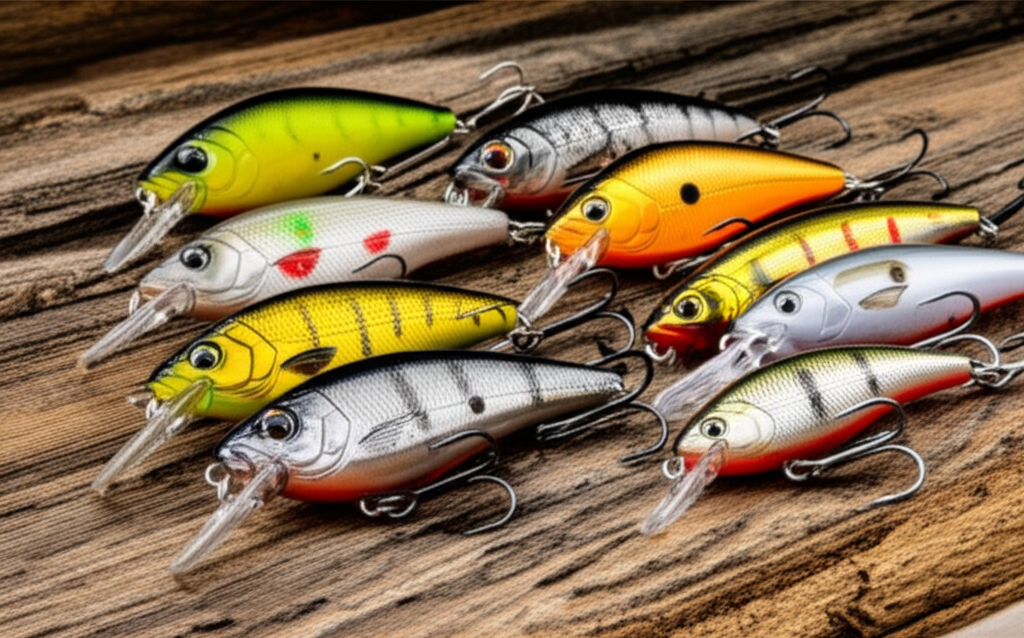
Your lure is your most important tool, and the choice is critical. You must match the crankbait’s diving depth to the depth of the water you are fishing. The goal is for the lure to consistently hit the bottom or the structure throughout the retrieve. For shallow crankbait riprap fishing (1-5 feet), a squarebill crankbait is king due to its ability to deflect off cover without snagging. For deeper crankbait fishing rocky points (8-15 feet), a medium-diving crankbait with a more rounded bill is a better choice.
- Action Item: Choose a crankbait rated to dive slightly deeper than the water depth. For 8 feet of water, a bait that dives to 10 feet will ensure consistent bottom contact.
- Required Tools: A selection of squarebills, medium-divers, and deep-divers in various colors (crawfish patterns, shad patterns, and chartreuse).
- Expected Outcome: A lure that maintains contact with the rocky structure, creating the necessary deflections to trigger strikes.
Step 2: Optimize Your Gear Setup
Standard-issue rods and reels can work, but specialized gear will dramatically improve your efficiency. A composite or fiberglass crankbait rod with a moderate action is ideal. This softer rod action allows fish to fully engulf the treble-hooked lure without tearing it out, and it provides more forgiveness when battling a large fish. Pair this with a casting reel with a moderate gear ratio (e.g., 6.4:1), which provides a good balance of speed and power for winching fish out of cover.
For line, 10-17 lb fluorocarbon is the top choice. It is abrasion-resistant, crucial for grinding on rock, and its low visibility is an advantage in clear water. It also sinks, helping your crankbait reach its maximum diving depth.
Step 3: Master the Cast and Retrieve
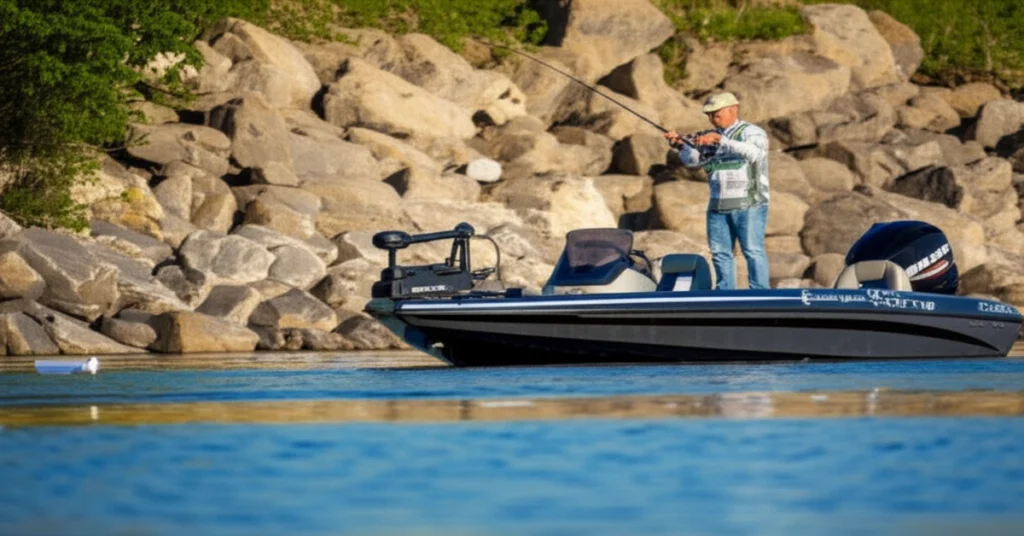
Boat positioning is paramount. Position your boat parallel to the bank, allowing you to make long casts that keep the lure in the strike zone for the entire retrieve. Cast your lure past your intended target and begin a steady retrieve. You want to feel the lure bumping and grinding along the rocks. When you feel a collision, pause for a split second. This pause is often when the strike occurs, as the lure suspends or slowly rises, looking like stunned prey. Vary your retrieve speed until you find what the fish want on that particular day.
Expert Tips & Best Practices for Crankbait Fishing Rocky Banks
Following best practices can significantly shorten the learning curve and increase your catch rate. The difference between a good day and a great day often comes down to small adjustments and refined techniques. Here are tips for anglers at every level of crankbait fishing rocky banks.
For Beginners:
- Start with Squarebills: Squarebill crankbaits are the most snag-resistant design and are perfect for learning the feel of deflecting off cover. Practice your crankbait riprap fishing along jetties or dams to build confidence.
- Use a Lure Retriever: Don’t let the fear of losing lures stop you. A simple pole-style or weight-style lure retriever will pay for itself in one trip by helping you recover snagged crankbaits.
- Focus on Angles: If you aren’t getting bites, don’t just leave the spot. Reposition your boat to bring the lure across the crankbait rocky structure from a different angle. This can present the bait in a way that triggers a previously unwilling fish.
For Advanced Users:
- Master the “Stop and Go”: Instead of a steady retrieve, try a “burn and kill” method. Reel the crankbait quickly for several feet to get it digging hard, then pause it completely. This erratic retrieve is deadly on pressured fish, especially when crankbait boulder fishing.
- Change Lure Sound Profiles: Fish can become conditioned to the sound of common rattling crankbaits. Switch to a silent or one-knocker model when fishing highly pressured waters or in very clear conditions. This subtle change can make a huge difference.
5 Common Crankbait Fishing Rocky Banks Mistakes to Avoid
Even experienced anglers can fall into bad habits. Avoiding these common mistakes is crucial for maximizing your success and minimizing frustration when engaging in crankbait fishing rocky banks. Recognizing and correcting these errors will lead to more time fishing and less time dealing with problems.
Mistake #1: Using the Wrong Rod Action
The Problem: Many anglers use a fast-action graphite rod for all techniques. With crankbaits, a stiff, fast rod can rip the small treble hooks out of a fish’s mouth during the hookset or fight.
The Solution: Switch to a composite or fiberglass rod with a moderate or moderate-fast action. The parabolic bend of these rods acts as a shock absorber, keeping consistent pressure on the fish and increasing your landing ratio.
Mistake #2: Setting the Hook Too Hard
The Problem: A classic “bassmaster” hookset is counterproductive with crankbaits. A violent hookset can tear the small hooks free or create a large hole in the fish’s mouth, allowing the lure to be thrown during a jump.
The Solution: Use a “sweep set.” When you feel the weight of the fish, simply reel down and pull back firmly in a long, sweeping motion. This allows the sharp treble hooks to do their job and ensures a secure connection.
Mistake #3: Giving Up on Snags Too Easily
The Problem: When the lure gets hung up, the first instinct is to pull hard, which only wedges the hooks deeper into the crankbait rocky structure. This leads to lost lures and wasted time.
The Solution: When you feel a snag, don’t pull. Instead, use the “bow and arrow” technique. Let some slack in your line, point your rod tip at the lure, and then quickly snap the slack. The momentum can often pop the lure free. If that fails, move your boat to the other side of the snag and try to pull it out from the reverse angle.
Advanced Crankbait Fishing Rocky Banks Strategies for 2024/2025
As technology evolves and fishing pressure increases, staying ahead of the curve is essential. These advanced strategies for crankbait fishing rocky banks leverage modern tools and a deeper understanding of fish behavior to unlock next-level results.
Leveraging Forward-Facing Sonar (FFS)
Forward-facing sonar has revolutionized how anglers approach offshore structure, and its application to crankbait fishing rocky banks is equally impactful. Use FFS to scan along crankbait rock walls or isolated crankbait rock piles to identify not just the structure, but the exact location of individual fish. You can then make precise casts that bring your crankbait through their strike window. More importantly, you can watch their real-time reaction to your lure’s speed and cadence, allowing you to make immediate adjustments to trigger a strike. This turns prospecting into precision targeting.
Finesse Cranking in High-Pressure Scenarios
On clear, heavily fished lakes, bass can become wary of loud, wide-wobbling crankbaits. This is where finesse cranking shines. This involves using lighter line (8-10 lb fluorocarbon), smaller or more subtle crankbaits (like flat-sided or balsa wood models), and a slower, more methodical retrieve. This approach is deadly in post-frontal conditions or during midday when the bite is tough. A silent, tight-wobbling crankbait deflected off a crankbait stone structure can be the key to getting bites when others can’t.
Essential Tools & Resources for Crankbait Fishing Rocky Banks
Having the right equipment and information is fundamental to success. While you can get started with basic gear, investing in a few specialized items will make your time on the water more efficient and enjoyable.
Recommended Tools:
- High-Quality Crankbaits: Invest in proven brands known for running true out of the box. Key models include the Strike King KVD 1.5 (squarebill), the Rapala DT (Dives-To) series, and the Norman Deep Little N.
- Dedicated Cranking Rod: A 7’0″ to 7’6″ composite or fiberglass rod with a moderate action is the cornerstone of any serious crankbait angler’s arsenal. This tool enhances casting distance, lure action, and landing percentage.
- Telescopic Lure Retriever: An essential tool, not a luxury. A good lure retriever will save you hundreds of dollars in lost lures and allow you to fish confidently in the heaviest rock cover where the biggest fish live.
Additional Resources:
- Lake Mapping Apps (Navionics, C-MAP): Use digital lake maps to identify promising crankbait rocky points, submerged roadbeds, and offshore rock piles before you even launch your boat.
- Online Fishing Forums: Websites like BassResource or local fishing forums can provide up-to-date reports on what types of rock structures are producing fish on specific bodies of water.
Frequently Asked Questions About Crankbait Fishing Rocky Banks
Q1: What are the best conditions for crankbait rock fishing?
Answer: Ideal conditions for crankbait rock fishing often involve a bit of wind. Wind pushes baitfish up against the rocky structure and breaks up the water’s surface, making fish less wary. Overcast days are also excellent, as they encourage bass to roam and actively hunt along these structures. However, techniques like crankbait boulder fishing on deep crankbait rocky points can be effective even on bright, sunny days, as the rocks provide shaded ambush spots for predatory fish.
Q2: How do I choose the right crankbait color for rocky banks?
Answer: A good rule of thumb is to match the primary forage. In many lakes, that means crawfish. Crawfish patterns in shades of red, orange, and brown are top producers, especially in spring and fall. In clearer water or when fish are feeding on shad, use natural shad or ghost patterns. For stained or muddy water, bright colors like chartreuse with a black back create a better silhouette and are easier for fish to see.
Q3: What’s the main difference between using a squarebill and a round-billed crankbait?
Answer: The bill shape dictates the lure’s action and how it interacts with cover. A squarebill has a wide, erratic wobble and is designed to deflect aggressively off shallow cover like rock and wood, making it perfect for crankbait riprap fishing. A round-billed crankbait typically dives deeper and has a tighter wobble. It’s designed to grind along the bottom in deeper water, making it ideal for targeting offshore crankbait rock piles or the ends of crankbait fishing rocky points.
Q4: What is the single most important tip for a beginner?
Answer: The most crucial tip is to embrace contact. Do not be afraid to get your lure down into the rocks. Choose a crankbait that dives deeper than the water you’re fishing so it’s constantly digging and deflecting. The noise and erratic action from hitting the rocks is the trigger. If you’re not feeling your lure hit the bottom, you’re not in the most productive zone.
Conclusion: Master Crankbait Fishing Rocky Banks for Long-term Success
From shallow riprap to deep offshore ledges, rocks are undeniably one of the most consistent fish-holding structures available to anglers. By understanding and applying the principles of crankbait fishing rocky banks, you can transform these intimidating areas into your go-to spots. Remember the core concepts: match your lure to the depth, use the right gear to absorb shock, and always strive for that critical, bite-triggering deflection.
As you gain more experience, you’ll develop an intuitive feel for how your crankbait is interacting with different types of cover. The future of angling will continue to reward those who master specific techniques for specific structures. Making crankbait rock fishing a cornerstone of your skill set, from crankbait fishing gravel transitions to steep crankbait rock walls, will ensure you remain a versatile and successful angler for years to come.