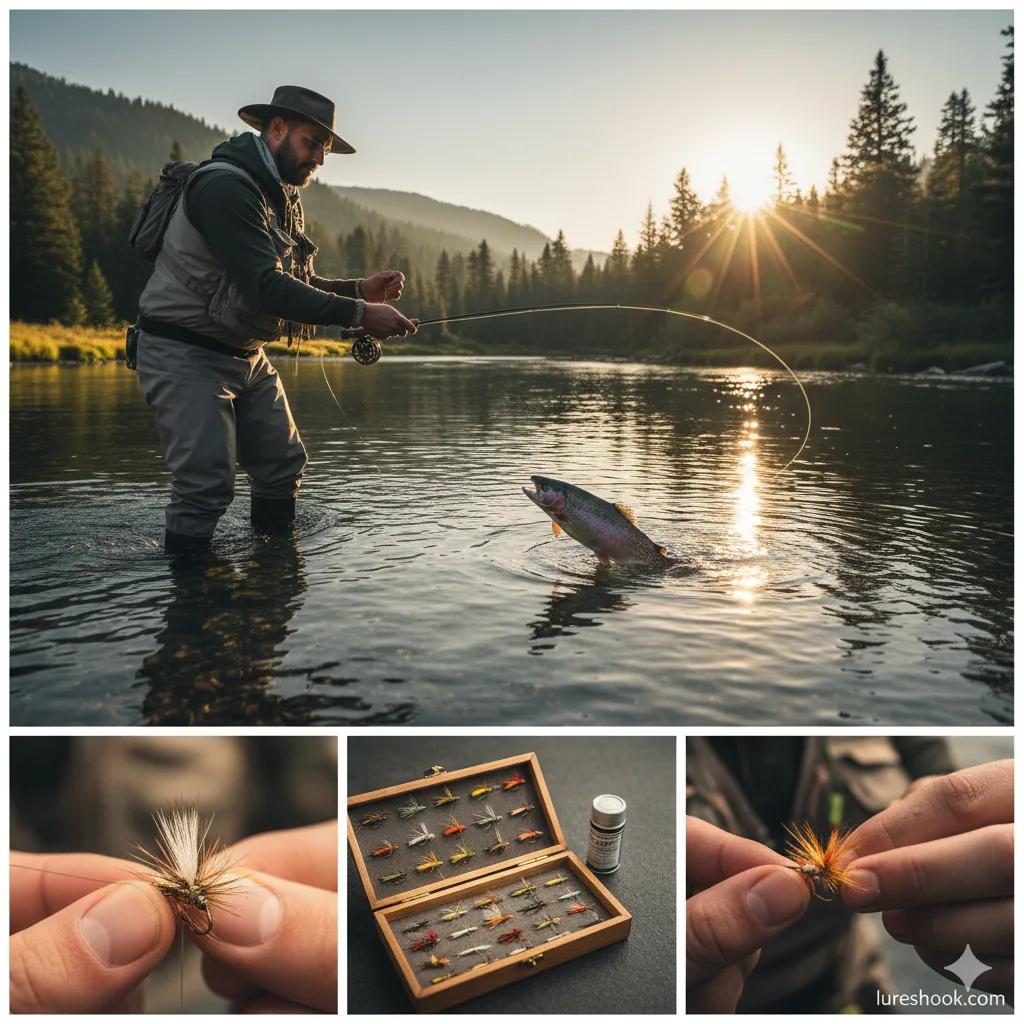
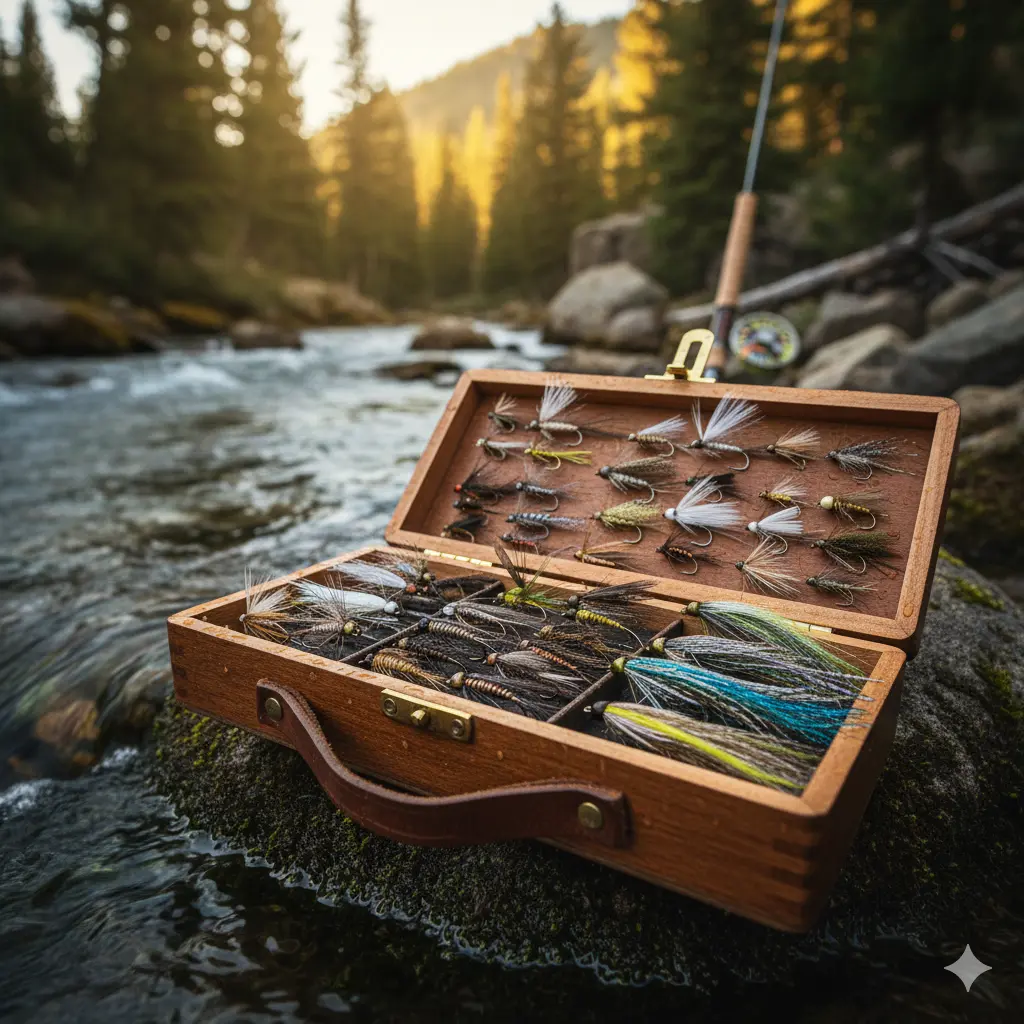
Master fly fishing with our ultimate guide to artificial flies, including dry flies, wet flies, nymphs, streamers, and proven techniques for catching more fish with fly lures.
Table of Contents
- What Are Fly Fishing Lures?
- Types of Fly Fishing Lures
- Dry Fly Fishing Guide
- Wet Fly and Nymph Techniques
- Streamer Fly Mastery
- Fly Selection and Matching the Hatch
- Fly Fishing Equipment and Setup
- Seasonal Fly Fishing Strategies
- Best Flies for Different Species 2025
- Advanced Fly Fishing Techniques
- Fly Tying Basics
- Frequently Asked Questions
What Are Fly Fishing Lures?
Fly fishing lures are artificial flies designed to imitate insects, baitfish, crustaceans, and other natural food sources that fish feed on. These lightweight lures are cast using the weight of the fly line rather than the lure itself, creating natural presentations that trigger feeding responses.
Why Fly Fishing Lures Work So Effectively
- Match Natural Food Sources: Precisely imitate insects and aquatic life
- Natural Presentation: Mimic the behavior of real prey
- Versatile Applications: Work in all water types and conditions
- Selective Targeting: Match specific insect hatches and feeding patterns
- Lightweight Design: Create delicate presentations that don’t spook fish
- Artistic Craftsmanship: Combine science and art for ultimate realism
When to Use Fly Fishing Lures
- Insect Activity: During mayfly, caddis, and stonefly hatches
- Clear Water: Where fish can see detailed imitations
- Pressured Waters: Selective fish that refuse other lures
- Shallow Water: Precise presentations in skinny water
- Structure Fishing: Around rocks, logs, and undercuts
- Feeding Activity: When fish are actively rising or feeding
Skill Level Assessment
- Beginner Elements: Basic casting, simple fly selection
- Advanced Techniques: Precise presentations, fly line control, entomology knowledge
- Equipment Mastery: Proper rod loading, line management
- Beginner Rating: 7/10 – Requires practice but incredibly rewarding
Types of Fly Fishing Lures
1. Dry Flies
Surface-floating insect imitations
Dry flies float on the water surface, imitating adult insects that have emerged or fallen onto the water:
Mayfly Imitations
- Patterns: Adams, Blue Winged Olive, Pale Morning Dun
- Characteristics: Upright wings, delicate tails
- Best Times: Spring through fall emergence periods
- Water Types: Freestone streams, spring creeks
Caddisfly Imitations
- Patterns: Elk Hair Caddis, X-Caddis, Goddard Caddis
- Characteristics: Tent-shaped wings, active movement
- Best Times: Evening emergence periods
- Technique: Dead drift or slight twitching
Stonefly Imitations
- Patterns: Stimulator, Yellow Sally, Golden Stone
- Characteristics: Large profile, prominent wings
- Best Times: Summer months, big water
- Applications: Fast water, pocket water fishing
Terrestrial Imitations
- Patterns: Ant, Beetle, Grasshopper, Cricket
- Characteristics: Non-aquatic insects on water
- Best Times: Late summer, windy days
- Locations: Banks, overhanging vegetation
2. Wet Flies
Subsurface traditional patterns
Wet flies are fished below the surface, representing drowned insects or emerging aquatic life:
Traditional Wet Flies
- Patterns: Partridge and Orange, March Brown, Alder
- Characteristics: Swept-back wings, soft hackle
- Technique: Swing and retrieve methods
- Best Conditions: Overcast days, colored water
Soft Hackle Flies
- Patterns: Pheasant Tail Soft Hackle, Hare’s Ear Soft Hackle
- Characteristics: Mobile hackle fibers, simple design
- Action: Natural movement in current
- Applications: Emerging insect imitation
3. Nymphs
Subsurface immature insect imitations
Nymph flies imitate the larval and pupal stages of aquatic insects:
Mayfly Nymphs
- Patterns: Pheasant Tail Nymph, Hare’s Ear Nymph, BWO Nymph
- Characteristics: Segmented bodies, wing cases
- Fishing Depth: Bottom to mid-water column
- Technique: Dead drift with indicator
Caddis Pupae
- Patterns: Emerging Caddis, LaFontaine Sparkle Pupa
- Characteristics: Swollen thorax, trailing shuck
- Fishing Method: Rising through water column
- Best Times: Evening emergence periods
Stonefly Nymphs
- Patterns: Montana Nymph, 20 Incher, Kaufmann’s Stone
- Characteristics: Large profile, prominent leg cases
- Habitat: Fast water, rocky bottoms
- Technique: Deep drifting, high-stick nymphing
Midge Pupae
- Patterns: Zebra Midge, Disco Midge, WD-40
- Characteristics: Small size, simple design
- Applications: Tailwaters, spring creeks
- Technique: Slow water, precise presentations
4. Streamers
Baitfish and leech imitations
Streamer flies imitate small fish, leeches, and other swimming prey:
Baitfish Imitations
- Patterns: Woolly Bugger, Clouser Minnow, Zonker
- Characteristics: Flowing materials, fish-like profile
- Technique: Active retrieve, stripping action
- Target Species: Trout, bass, pike
Leech Patterns
- Patterns: Bunny Leech, Mohair Leech, Crystal Bugger
- Characteristics: Undulating movement, dark colors
- Best Conditions: Lakes, slow water, muddy bottoms
- Retrieve: Slow, pulsing strips
Sculpin Imitations
- Patterns: Muddler Minnow, Sculpin Helmet, Conehead Sculpin
- Characteristics: Large head, mottled colors
- Habitat: Rocky streams, undercut banks
- Technique: Bottom bouncing, erratic retrieves
5. Saltwater Flies
Marine species imitations
Saltwater flies target ocean and estuary species:
Baitfish Patterns
- Patterns: Clouser Minnow, Deceiver, Surf Candy
- Characteristics: Durable materials, weighted eyes
- Target Species: Striped bass, redfish, tarpon
- Technique: Fast strips, erratic movement
Shrimp and Crab Patterns
- Patterns: Crazy Charlie, Gotcha, Merkin Crab
- Characteristics: Bottom-oriented, realistic colors
- Applications: Flats fishing, shallow water
- Technique: Slow strips, bottom contact
Dry Fly Fishing Guide
Dry Fly Selection and Matching the Hatch
Understanding Insect Emergence:
Mayfly Hatches
- Timing: Spring through fall, specific to species
- Identification: Upright wings, segmented tails
- Imitation Strategy: Match size, color, and silhouette
- Key Patterns: Adams (#12-16), Blue Winged Olive (#16-20)
Caddis Hatches
- Timing: Evening emergence periods
- Identification: Tent-shaped wings over body
- Behavior: Active, fluttering on surface
- Key Patterns: Elk Hair Caddis (#12-16), X-Caddis (#14-18)
Stonefly Emergence:
- Timing: Late spring to summer
- Identification: Large size, prominent wings
- Habitat: Fast, rocky streams
- Key Patterns: Stimulator (#6-12), Yellow Sally (#12-16)
Dry Fly Presentation Techniques:
Dead Drift Presentation
- Technique: Natural float with current
- Line Management: Mend upstream to eliminate drag
- Cast Position: Upstream and across
- Success Factor: Drag-free drift essential
Reach Cast Technique:
- Purpose: Extend drag-free drift
- Method: Reach rod upstream during cast
- Applications: Complex currents, selective fish
- Advantage: Longer natural presentations
Parachute Post Technique:
- Patterns: Parachute Adams, Parachute BWO
- Advantage: Better visibility, improved float
- Applications: Smooth water, picky fish
- Technique: Precise placement, minimal disturbance
Advanced Dry Fly Strategies
Multiple Fly Rigs:
- Dropper Setup: Dry fly with nymph dropper
- Advantages: Cover multiple feeding zones
- Rigging: 18-24 inch tippet from dry fly hook bend
- Applications: Complex feeding situations
Emerger Patterns:
- Concept: Insects transitioning from nymph to adult
- Patterns: CDC Emerger, Sparkle Dun, RS2
- Presentation: Film or just subsurface
- Timing: Peak of hatch activity
Terrestrial Fishing:
- Season: Late summer, early fall
- Conditions: Windy days, near banks
- Patterns: Dave’s Hopper, Foam Ant, Flying Beetle
- Technique: Bank fishing, overhanging cover
Dry Fly Equipment Recommendations
Rod Selection:
- Length: 8’6″ to 9′ for most applications
- Weight: 4-6 weight for trout, 7-8 weight for bass
- Action: Medium to medium-fast for delicate presentations
- Top Models: Sage Foundation, Orvis Clearwater
Line Selection:
- Type: Weight-forward floating lines
- Taper: Delicate presentation tapers
- Color: Light colors for visibility
- Brands: Rio Grand, Scientific Anglers Mastery
Leader and Tippet:
- Length: 9-12 feet for natural presentation
- Taper: Long, fine tippet sections
- Material: Fluorocarbon or monofilament
- Size: 5X-7X for most trout applications
Wet Flies and Nymph Techniques
Nymph Fishing Fundamentals
Understanding Aquatic Insect Life Cycles:
Mayfly Development:
- Egg Stage: Bottom of stream, 6-12 months
- Nymph Stage: Active feeding, multiple molts
- Emerger Stage: Rising to surface for emergence
- Adult Stage: Mating, egg laying, death
Caddis Development:
- Larva Stage: Case-building or free-living
- Pupa Stage: Sealed case, transformation
- Emergence: Active swimming to surface
- Adult: Terrestrial phase, mating flights
Nymph Fishing Techniques
Indicator Nymphing:
- Setup: Strike indicator, split shot, nymph flies
- Depth: Adjust indicator position for water depth
- Technique: High-stick method, maintain contact
- Detection: Watch indicator for subtle stops or twitches
Euro Nymphing (Czech Nymphing):
- Concept: Tight-line contact, no indicator
- Equipment: Long, light rod, minimal weight
- Technique: Lead flies upstream, follow with rod tip
- Advantages: Direct contact, better sensitivity
High-Stick Nymphing:
- Method: Keep rod tip high, maintain tight line
- Applications: Pocket water, short drifts
- Advantage: Maximum sensitivity and control
- Technique: Follow flies with rod tip movement
Multi-Nymph Rigs:
- Tandem Rig Setup: Two nymphs, 18-24 inches apart
- Strategy: Different sizes/patterns to test preferences
- Rigging: Dropper from hook bend or tippet tag
- Three-Fly Rigs: Requires skill to avoid tangles
Wet Fly Fishing Techniques
Traditional Wet Fly Methods:
- Down and Across Swing: Let fly swing in current arc
- Leisenring Lift: Fly rises like emerging insect at end of drift
- Soft Hackle Techniques: Mobile hackle creates lifelike action
Streamer Fly Mastery
Streamer Fishing Fundamentals
Understanding Baitfish Behavior:
- Seasonal Movements: Follow baitfish migrations
- Feeding Patterns: Predators ambush near structure
- Water Conditions: Streamers excel in off-color water
- Time of Day: Early morning and evening most productive
Essential Streamer Patterns
Woolly Bugger
- Versatility: Works for all species, all conditions
- Colors: Black, olive, brown, white
- Technique: Strip retrieve, dead drift, swing
Clouser Minnow
- Design: Weighted eyes, inverted hook
- Applications: Freshwater and saltwater
- Technique: Jigging action, fast strips
Muddler Minnow:
- Profile: Sculpin imitation, deer hair head
- Applications: Rocky streams, undercut banks
- Technique: Bottom bouncing, erratic retrieves
Zonker:
- Material: Rabbit strip wing, weighted body
- Action: Undulating, lifelike movement
- Applications: Lakes, slow rivers
Streamer Fishing Techniques
Strip Retrieve Methods:
- Fast Strip Retrieve: Quick, aggressive strips to trigger reaction strikes
- Slow Strip Retrieve: Long, slow pulls to imitate wounded baitfish
- Jerk Strip Retrieve: Sharp jerks with variable pauses for erratic action
Water Column Strategies:
- Surface Streamers: Create surface disturbance for aggressive fish
- Mid-Water Streamers: Use lightly weighted flies or intermediate lines
- Deep Water Streamers: Use heavy flies and fast-sinking lines for bottom contact
Seasonal Streamer Strategies
- Spring: High water, dark streamers, slow retrieves
- Summer: Early/late fishing, smaller patterns, fast retrieves
- Fall: Peak season, large baitfish imitations, aggressive strips
- Winter: Ultra-slow retrieves, small, dark patterns
Fly Selection and Matching the Hatch
Entomology Basics for Fly Fishers
Major Insect Orders:
- Mayflies (Ephemeroptera) : Upright wings, 2-3 tails, found in clean, flowing water
- Caddisflies (Trichoptera) : Tent-shaped wings, active behavior, larvae build cases
- Stoneflies (Plecoptera): Flattened wings, large nymphs, found in fast, cold water
- Midges (Diptera): Small size, single pair of wings, a year-round food source
Hatch Matching Strategy:
- Size Matching: Carry multiple sizes (#8 to #24) and when in doubt, go smaller.
- Color Matching: Prioritize natural body colors and adjust brightness for water clarity.
- Silhouette Matching: Ensure the overall shape and proportions are correct.
Fly Box Organization and Selection
Essential Dry Fly Selection:
- Mayfly Imitations: Adams, Blue Winged Olive, Pale Morning Dun
- Caddis Imitations: Elk Hair Caddis, X-Caddis
- Terrestrials: Dave’s Hopper, Foam Ant, Beetle patterns
Essential Nymph Selection:
- General Patterns: Pheasant Tail Nymph, Hare’s Ear Nymph, Copper John
- Specialized Patterns: Stonefly nymphs, Caddis pupae, Midge pupae
Essential Streamer Selection:
- Universal Patterns: Woolly Bugger (multiple colors), Clouser Minnow, Muddler Minnow
- Specialized Streamers: Sculpin patterns, Articulated streamers, Saltwater patterns
Fly Fishing Equipment and Setup
Fly Rod Selection
Rod Weight Classifications:
- 3-4 Weight: Small streams, delicate presentations for small to medium trout.
- 5-6 Weight : The most popular and versatile choice for all-around trout fishing.
- 7-8 Weight: For large trout, bass, and steelhead, handles bigger flies and wind.
- 9-12 Weight: Specialized for saltwater and large gamefish like tarpon.
Rod Action and Length:
- Fast Action: Powerful, ideal for distance casting and streamers.
- Medium Action: Versatile and forgiving, great for all-around fishing.
- Slow Action: Best for short, delicate casts and dry flies.
Fly Reel Selection
- Click and Pawl: Simple, lightweight, limited drag pressure.
- Disc Drag : Smooth, adjustable, and durable for all situations.
Fly Line Selection
- Floating Lines : Most common, versatile for dry flies and shallow nymphs.
- Sinking Lines: Used to get flies deep quickly for nymphing or streamers.
- Sink-Tip Lines: A compromise between floating and sinking lines.
Leaders and Tippet Systems
- Tapered Leaders: Transfers casting energy for a natural presentation.
- Monofilament Tippet: Stretchy and floats, ideal for dry flies.
- Fluorocarbon Tippet: Sinks and is nearly invisible, best for nymphs and spooky fish.
Seasonal Fly Fishing Strategies
Spring Fly Fishing
- Early Spring: Focus on nymphs and streamers with slow, deep presentations.
- Late Spring: Major hatches begin, so match the mayfly and caddis emergences.
Summer Fly Fishing
- Early Summer: The peak season, use a variety of techniques to match hatches.
- Mid-Summer: Challenges of low, warm water. Fish early/late and use smaller flies.
Fall Fly Fishing
- Early Fall: Excellent conditions with active fish. Terrestrials and streamers are highly effective.
- Late Fall: Streamer fishing is a primary focus as fish prepare for winter.
Winter Fly Fishing
- Challenges: Slow fish metabolism. Fish during the warmest part of the day.
- Opportunities: Midges are a consistent food source. Fish tailwaters for stable temperatures.
Best Flies for Different Species 2025
Trout Flies
- Brown Trout : Wary and selective. Use Pheasant Tail Nymphs and Woolly Buggers.
- Rainbow Trout : Aggressive and acrobatic. Excellent dry fly targets like Parachute Adams.
- Brook Trout : Cold water specialists. Try Stimulators and traditional wet flies.
- Cutthroat Trout: Opportunistic. Stonefly nymphs and large dry flies are effective.
Bass Flies
- Largemouth Bass : Aggressive, structure-oriented. Use poppers, Hair Bugs, and Clouser Minnows.
- Smallmouth Bass : Current-oriented fighters. Focus on streamers and crayfish patterns.
Pike and Musky Flies
- Northern Pike : Ambush predators. Use large streamers like Deceivers and Pike Bunnies.
- Musky: The ultimate challenge. Use articulated streamers and heavy equipment.
Saltwater Species Flies
- Striped Bass : Schooling and baitfish-oriented. Use Clouser Minnows and Deceivers.
- Redfish: Shallow flats, tail feeders. Crab and shrimp patterns are essential.
- Tarpon: The “Silver King.” Use specialized Tarpon Toads and heavy rods.
Advanced Fly Fishing Techniques
Precision Casting Techniques
- Roll Cast Mastery: Ideal for tight spaces with overhead obstacles.
- Mending Techniques: Critical for a drag-free drift. Mend upstream to slow the fly down.
- Aerial Mending: Redirects the line in the air before it lands for a cleaner presentation.
Advanced Nymphing Techniques
- Czech Nymphing : A tight-line technique with no indicator, for maximum sensitivity.
- French Nymphing: Uses ultra-light tippets and long leaders for delicate presentations.
- Polish Nymphing: A hybrid approach combining indicator and tight-line methods.
Streamer Fishing Mastery
- Advanced Retrieve Patterns: Vary your stripping with pauses and jerks to imitate wounded baitfish.
- Two-Handed Spey Techniques: For casting large flies long distances with less effort.
Saltwater Advanced Techniques
- Sight Fishing Skills: Use polarized glasses to spot fish and their movements.
- Presentation: Cast ahead of the fish’s path and use a “strip set” to hook them.
Fly Tying Basics
Essential Fly Tying Tools
- Vise: Holds the hook securely. A quality vise is a great investment.
- Bobbin: Manages thread tension and delivery.
- Scissors: Fine-point scissors for precise cuts.
- Additional Tools: Hackle pliers, dubbing needle, and whip finish tool.
Basic Materials
- Thread: Various sizes and colors.
- Hooks: Specific types for dry flies, nymphs, and streamers.
- Materials: Feathers, fur, and synthetics like Flashabou and foam.
Basic Fly Patterns to Learn
- Woolly Bugger (Beginner): A versatile and simple pattern to start with.
- Pheasant Tail Nymph (Intermediate): A classic that teaches body and wing case construction.
- Adams Dry Fly (Advanced): A more complex pattern to master wing mounting and hackle wrapping.
Frequently Asked Questions
(Content for FAQ section not provided in the original text. Please fill in as needed.)