Chatterbait Blade Types: The Ultimate Angler’s Guide (2024)
Ever wonder why some days the chatterbait is unstoppable, and others it feels like you’re just casting for exercise? The secret often lies not in the trailer or the retrieve, but in the small, vibrating piece of metal at the front of the lure. Understanding the nuances of chatterbait blade types is the single biggest factor that separates novice anglers from seasoned pros who consistently land trophy bass. This guide will demystify the world of bladed jigs, transforming your approach and boosting your catch rate by helping you match the perfect blade to any condition.
Consider the blade the engine of your lure; it dictates everything from sound and vibration to depth and action. By the end of this comprehensive breakdown, you’ll have a clear roadmap for your chatterbait blade selection, knowing precisely which blade to tie on whether you’re facing muddy water, clear reservoirs, thick vegetation, or rocky points. We’ll dive deep into shapes, sizes, materials, and colors, providing actionable insights to elevate your chatterbait blade fishing to an elite level.
Table of Contents
- What is chatterbait blade types?
- Key Benefits and Importance
- Complete Step-by-Step Guide
- Expert Tips & Best Practices
- Common Mistakes to Avoid
- Advanced Strategies for 2024/2025
- Essential Tools & Resources
- Frequently Asked Questions
What is chatterbait blade types?
At its core, the term chatterbait blade types refers to the diverse range of oscillating metal plates attached to the front of a bladed jig. These blades are the primary source of the lure’s signature vibration, flash, and erratic hunting motion that drives predatory fish wild.
The specific design of a blade dictates its on-the-water performance, making proper chatterbait blade selection critical for success. Factors like shape, material, and size influence everything from the intensity of the chatterbait blade vibration to the lure’s overall chatterbait blade action. This comprehensive chatterbait blade guide will show how understanding these variables gives you precise control, turning a simple lure into a versatile fish-catching machine. Mastering chatterbait blade choices is fundamental to improving your overall chatterbait blade performance and adapting to any fishing scenario.
Key Components
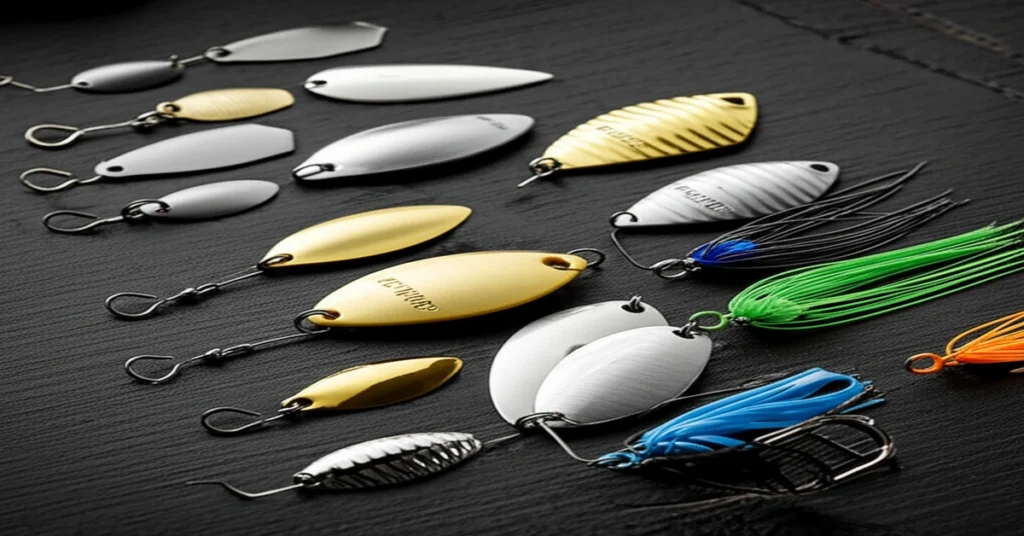
- Blade Shape: The geometry of the blade (e.g., hexagonal, coffin, rounded) is the primary driver of its action. A classic hexagonal shape produces the iconic hard-thumping vibration, while a more rounded or elongated shape might offer a tighter, more subtle wiggle.
- Blade Material & Thickness: Most blades are stainless steel, but materials like brass or even painted blades offer different acoustic profiles and durability. Thicker blades are more durable in heavy cover and can produce a deeper thump, impacting the overall chatterbait blade vibration.
- Connection Method: How the blade attaches to the jig head—either directly to the eyelet or via a split ring—significantly alters the lure’s freedom of movement. A direct connection often yields a harder, more intense vibration, while a split ring allows for a wider, more erratic hunting action.
- Blade Size & Weight: The overall surface area and weight of the blade, which relates to chatterbait blade sizes, determines how much water it displaces. Larger blades create more lift and a more powerful vibration, making them ideal for muddy water or fishing higher in the water column.
Why chatterbait blade types Matters: Key Benefits
Understanding different chatterbait blade types isn’t just an exercise in tackle-tinkering; it’s a strategic advantage that directly translates to more fish in the boat. By customizing your blade, you can adapt a single lure to an incredible variety of conditions, depths, and forage types. This adaptability is the key to unlocking the full potential of a bladed jig.
Ultimate Versatility and Adaptability
The primary benefit of mastering various chatterbait blade types is unparalleled versatility. For example, on a calm, clear day with finicky bass, you might switch to a smaller, rounded, translucent blade for a finesse presentation. The next day, facing windy conditions and stained water, you could opt for a large, painted hexagonal blade to create maximum chatterbait blade vibration and a highly visible profile. This ability to dial in your presentation on the fly allows you to effectively target fish regardless of the environmental challenges.
Triggering Aggressive Reaction Strikes
A bladed jig’s effectiveness comes from its ability to trigger a predatory response. The right chatterbait blade performance combines intense vibration, a distinct visual flash, and an erratic hunting motion that perfectly mimics panicked or fleeing baitfish. Different chatterbait blade types allow you to fine-tune this trigger. A wider, harder-thumping blade can call fish from a distance in murky water, while a blade with a unique high-frequency buzz can trigger strikes from neutral fish that have ignored other presentations. Mastering your chatterbait blade choices gives you a full arsenal of strike-provoking actions.
\”The blade is 90% of the conversation. If the blade isn’t right for the conditions, the best trailer or jig in the world won’t make a difference. Matching the blade’s vibration and flash to the water clarity and mood of the fish is everything.\”
Complete Guide to chatterbait blade types – Step-by-Step
A systematic approach to chatterbait blade selection will dramatically improve your consistency. Instead of randomly picking a lure, follow this step-by-step process to make an informed decision based on the conditions you face. This is your practical chatterbait blade guide for on-the-water success.
Step 1: Analyze Water Conditions and Forage Base
Your first step is always to assess the environment. Water clarity is the most important factor influencing your chatterbait blade choices.
- Clear Water (5+ feet visibility): Opt for smaller, more subtle blades. Rounded or willow-leaf style blades with a tighter wiggle are excellent. For chatterbait blade colors, choose translucent, smoke, or metallic finishes (chrome, silver) that create flash without being overly intrusive.
- Stained Water (2-4 feet visibility): This is prime territory for standard hexagonal blades. You need a good balance of vibration and flash. Metallic colors like gold and silver work well, as do painted blades that match your jig skirt.
- Muddy Water (Less than 2 feet visibility): Go big and loud. Choose the largest blade you can, often a wide hexagonal or coffin-shaped blade, to maximize water displacement and chatterbait blade vibration. Solid, bright chatterbait blade colors like chartreuse, orange, or solid black create a strong silhouette that fish can key in on.
Step 2: Match the Blade Action to the Cover
The type of structure you’re fishing dictates the ideal chatterbait blade action and durability. A blade that excels in open water may be a liability in heavy cover.
For fishing through submerged grass, a blade with a sharper leading edge (like a hex or coffin shape) helps cut through vegetation. When fishing around wood or rock, a thicker, more durable stainless steel blade is crucial to prevent bending or damage. A blade that produces a strong \”hunting\” or erratic side-to-side action is fantastic in open water but may cause more snags in dense cover, where a more streamlined action is preferred.
Step 3: Fine-Tune with Retrieve Speed and Trailer Selection
The final step is to integrate your retrieve with your blade choice. Your selected blade will have an optimal speed range for the best chatterbait blade performance.
Large, high-vibration blades can be fished slower while still producing a hard thump. Smaller, finesse blades may need a slightly faster retrieve to get them vibrating correctly. Pair your lure with a trailer that complements the blade’s action—a bulky swimbait trailer can temper a hard-thumping blade, while a streamlined fluke-style trailer will allow for maximum erratic action. Experiment with your retrieve until you feel the blade \”thump-thump-thumping\” consistently.
Expert Tips & Best Practices for chatterbait blade types
Following best practices will accelerate your learning curve and help you avoid common frustrations. These chatterbait blade tips are designed to give you a solid foundation and introduce advanced concepts for refining your approach.
For Beginners:
- Start with the Standard: Begin your collection with a 1/2 oz bladed jig featuring a standard hexagonal stainless steel blade. This is the most versatile of all chatterbait blade types and will work in a wide range of conditions, allowing you to learn the basic feel and retrieve.
- Keep Colors Simple: Don’t get overwhelmed by chatterbait blade colors. Start with three basics: a metallic finish (silver or gold) for flash in clear to stained water, a white blade to imitate shad, and a black blade for a stark silhouette in muddy water or low light.
- Vary Your Retrieve: The biggest mistake beginners make is a monotonous retrieve. As you reel, occasionally pop your rod tip, briefly pause, or speed up the retrieve. These changes in cadence will often trigger a strike by making the chatterbait blade action more erratic.
For Advanced Users:
- Tune Your Blades: Don’t be afraid to modify your blades. Using pliers, you can slightly flatten the blade for a wider, slower thump or cup it more for a tighter, faster vibration. This allows you to create a custom chatterbait blade action that fish in your local waters haven’t seen.
- Experiment with Materials: Move beyond standard stainless steel. Brass blades produce a duller, lower-frequency sound that can be deadly in cold water. Custom-painted blades can perfectly match local forage or provide a target for bass to strike in murky conditions, enhancing overall chatterbait blade performance.
5 Common chatterbait blade types Mistakes to Avoid
Success in chatterbait blade fishing is often about avoiding simple errors. Being aware of these common pitfalls will keep your lure running effectively and increase your hook-up ratio.
Mistake #1: Sticking to One Blade for All Situations
The Problem: Many anglers find one bladed jig that works once and then use it exclusively. This one-size-fits-all approach ignores changing water conditions, cover, and fish mood, severely limiting the lure’s effectiveness.
The Solution: Build a small, diverse arsenal of chatterbait blade types. Have options for clear water (small, subtle blades) and dirty water (large, loud blades). Actively changing your blade based on conditions is the hallmark of an expert angler.
Mistake #2: Using the Wrong Fishing Line
The Problem: Using monofilament or heavy braid without a leader can dampen the lure’s vibration. The stretch in monofilament absorbs much of the subtle feedback, while braid tied directly can be too visible in clear water.
The Solution: For optimal chatterbait blade performance, use 15-20 lb fluorocarbon line. It’s low-stretch, allowing you to feel every thump of the blade, and its near-invisibility underwater is perfect for most conditions. If using braid, always attach a fluorocarbon leader.
Mistake #3: Mismatching the Blade and Trailer
The Problem: A large, bulky trailer paired with a small, finesse blade will kill the lure’s action. Conversely, a tiny trailer on a massive, hard-thumping blade won’t provide enough stability, causing the lure to roll over.
The Solution: Ensure the trailer complements the blade’s size and intended action. For large blades, use trailers with some bulk and kicking action. For smaller blades, opt for streamlined pin-tail or fluke-style trailers that won’t overpower the chatterbait blade action.
Mistake #4: Ignoring Blade Maintenance
The Problem: After use, blades can become bent, chipped, or dulled from contact with rocks and wood. A damaged blade will not vibrate correctly, rendering the lure ineffective.
The Solution: Regularly inspect your blades. Use pliers to gently bend them back into shape if they get tweaked. Clean off any grime and check the connection point for wear and tear. A well-maintained blade is key to consistent performance.
Mistake #5: Setting the Hook Too Quickly
The Problem: A chatterbait bite can be incredibly violent, causing a knee-jerk reaction to set the hook instantly. This often pulls the lure away from the fish before it has fully engulfed it.
The Solution: Train yourself to use a \”reel-set.\” When you feel the bite, instead of snapping the rod up, simply keep reeling and sweep the rod to the side. This allows the fish to take the bait fully and results in a much higher hook-up percentage.
Advanced chatterbait blade types Strategies for 2024/2025
As bladed jigs become more popular, bass are becoming more conditioned to standard presentations. These cutting-edge strategies for manipulating chatterbait blade types will keep you ahead of the curve and help you fool even the most pressured fish.
Finesse Blading for High-Pressure Scenarios
In heavily fished lakes or ultra-clear water, the classic hard-thumping chatterbait can be too aggressive. The advanced strategy is to downsize everything. This involves using lighter jigs (1/4 or 3/8 oz) paired with significantly smaller chatterbait blade sizes. Look for blades with a more rounded shape and a direct connection to the jig head, which produces a very tight, high-frequency shimmer rather than a wide thump. This subtle chatterbait blade vibration presents a much smaller, more natural profile that tempts wary bass that would otherwise spook from a standard bladed jig.
Acoustic Customization with Different Materials
Go beyond visual appeal and focus on sound. While stainless steel is standard, savvy anglers in 2024 are experimenting with other materials to alter the lure’s acoustic footprint. Brass blades, for instance, are softer and produce a duller, lower-pitched \”thud\” that can be highly effective in colder water when a bass’s metabolism is slow. Some anglers are even custom-making or modifying blades from aluminum for a lightweight, high-frequency rattle. This focus on the specific sound profile generated by different chatterbait blade types is a next-level approach to matching the hatch.
Essential Tools & Resources for chatterbait blade types
Having the right tools and knowledge resources makes experimenting with and maintaining your bladed jigs much easier. Here are some essentials for any serious chatterbait angler.
Recommended Tools:
- Split Ring Pliers: An absolute must-have. This tool makes changing out different chatterbait blade types quick and painless, allowing you to adapt on the water without having to retie completely.
- Needle Nose Pliers: Perfect for tuning and repairing bent blades. A gentle squeeze can bring a damaged blade back to its original shape and restore its proper chatterbait blade action.
- Blade Paint & Markers: A set of durable, waterproof paint pens (like Spike-It markers) allows you to customize chatterbait blade colors on the fly. You can add a splash of chartreuse to the tip, black out a shiny blade for a silhouette effect, or add a red gill flash.
Additional Resources:
- Tackle Warehouse & Manufacturer Videos: Websites of companies that specialize in bladed jigs (like Z-Man or Project Z) often have detailed videos explaining the intended purpose of their different chatterbait blade choices.
- Online Fishing Forums (e.g., BassResource): These communities are a goldmine of user-submitted chatterbait blade tips and real-world reports on what’s working. You can learn about custom modifications and niche blade designs from experienced anglers.
Frequently Asked Questions About chatterbait blade types
Q1: How does water clarity affect my chatterbait blade selection and the lure’s overall performance?
Answer: Water clarity is the number one factor. In clear water, your chatterbait blade selection should lean towards smaller blades with subtle finishes (smoke, translucent, plain metallic) to create flash without spooking fish. In stained or muddy water, you need a blade that maximizes chatterbait blade vibration and visibility; this means larger chatterbait blade sizes and bright or dark solid chatterbait blade colors (chartreuse, black, white) to create a strong profile and call fish in.
Q2: What is the best all-around, most versatile chatterbait blade type?
Answer: If you could only have one, a medium-sized, classic hexagonal blade made of stainless steel is the most versatile. It offers a strong, consistent thump and good flash, making it effective in the widest range of conditions, from slightly stained to moderately muddy water. It’s the benchmark for chatterbait blade action.
Q3: Can you change the blades on most chatterbaits?
Answer: Yes, on most models. If the blade is attached via a split ring, you can use split ring pliers to easily swap it out. If it’s attached via a molded wire loop, you can carefully open the loop with pliers, change the blade, and bend it back closed. This allows for endless customization of your chatterbait blade types without buying new lures.
Q4: Does the retrieve speed change depending on the chatterbait blade type?
Answer: Absolutely. Larger, wider blades displace more water and create more lift, allowing you to retrieve them very slowly while still maintaining a strong vibration. Smaller, more streamlined blades have less resistance and may require a slightly faster retrieve to achieve the desired chatterbait blade action and keep the lure from sinking too quickly.
Conclusion: Master chatterbait blade types for Long-term Success
The journey to mastering bladed jigs begins and ends with a deep understanding of chatterbait blade types. It’s the critical component that dictates every aspect of the lure’s presentation, from its thump and flash to its running depth. By moving beyond a one-size-fits-all mentality, you empower yourself to adapt, overcome challenging conditions, and present fish with a look they can’t resist.
As you move forward, continue to experiment and pay close attention to how subtle changes in your setup affect your results. A deliberate approach to chatterbait blade selection, a focus on the right chatterbait blade sizes, and a thoughtful use of chatterbait blade colors will undoubtedly lead to more and bigger fish. This detailed chatterbait blade guide provides the framework; your on-the-water experience will build the expertise for years of continued success in your chatterbait blade fishing endeavors.
Related Articles You Might Find Helpful:
- The Ultimate Guide to Chatterbait Blade Selection for Murky Water
- How to Choose the Perfect Chatterbait Trailer
- Advanced Techniques for Fishing Bladed Jigs in Heavy Cover
What’s Your chatterbait blade types Experience?
What’s your go-to blade shape and color combination for targeting largemouth in grassy lakes? Share your favorite chatterbait blade tips in the comments below!
Note: This guide reflects current best practices and is updated regularly to ensure accuracy. Last updated: October 17, 2023