Carolina Rig Tube Fishing: The Ultimate Pro Guide
Are you struggling to catch bass when they’re scattered, deep, or just plain finicky? There’s a time-tested technique that excels in these tough conditions, yet many anglers overlook its subtle power. Effective carolina rig tube fishing is the key to unlocking bites from pressured fish by presenting a bait in the most natural way possible. This guide will transform you from a novice to a confident expert, detailing everything from the basic setup to advanced strategies that dominate on the water.
We’ll break down the exact components you need, the step-by-step process for a perfect rig, and the retrieval methods that trigger aggressive strikes. Whether you’re targeting largemouth on deep ledges or smallmouth on rocky flats, mastering carolina rig tube fishing will add a crucial tool to your arsenal. Get ready to cover water efficiently and feel the subtle tap of a bass inhaling your perfectly presented tube bait.
Table of Contents
- What is carolina rig tube fishing?
- Key Benefits and Importance
- Complete Step-by-Step Guide
- Expert Tips & Best Practices
- Common Mistakes to Avoid
- Advanced Strategies for 2024/2025
- Essential Tools & Resources
- Frequently Asked Questions
What is carolina rig tube fishing?
Carolina rig tube fishing is a bottom-contact fishing method designed to present a soft plastic tube bait in a subtle, free-floating manner, separated from the weight. The rig allows the heavy sinker to drag along the bottom, creating disturbance and attracting attention, while the unweighted tube drifts and darts enticingly behind it on a leader.
This separation is the magic of the system. It’s a premier technique for searching large, relatively flat areas like points, humps, and submerged roadbeds. It excels in post-spawn and summer patterns when bass move offshore. Understanding the nuances of the carolina rig tube setup is fundamental to effective carolina rig bass fishing. This comprehensive carolina rig tube guide will cover the best carolina rig tubes, essential carolina rig tube tips, and various carolina rig presentations to make you a more versatile angler.
Key Components
- Main Line: Typically 15-20 lb fluorocarbon or monofilament, connecting your reel to the rig. Fluorocarbon is preferred for its sensitivity and low visibility.
- Sinker: A heavy egg or bullet sinker (1/2 to 1 oz), usually made of lead or tungsten, that maintains bottom contact. Tungsten is more sensitive and compact.
- Bead: A glass or plastic bead placed between the sinker and the swivel. It protects the knot and creates a clicking sound that can attract fish.
- Swivel: A barrel swivel that connects the main line to the leader. This crucial component prevents line twist as the tube bait moves freely.
- Leader: A 12- to 48-inch section of lighter line (10-15 lb fluorocarbon) that connects the swivel to the hook, allowing the tube to float naturally.
- Hook: A 3/0 to 5/0 Extra Wide Gap (EWG) offset hook is ideal for rigging tubes weedless.
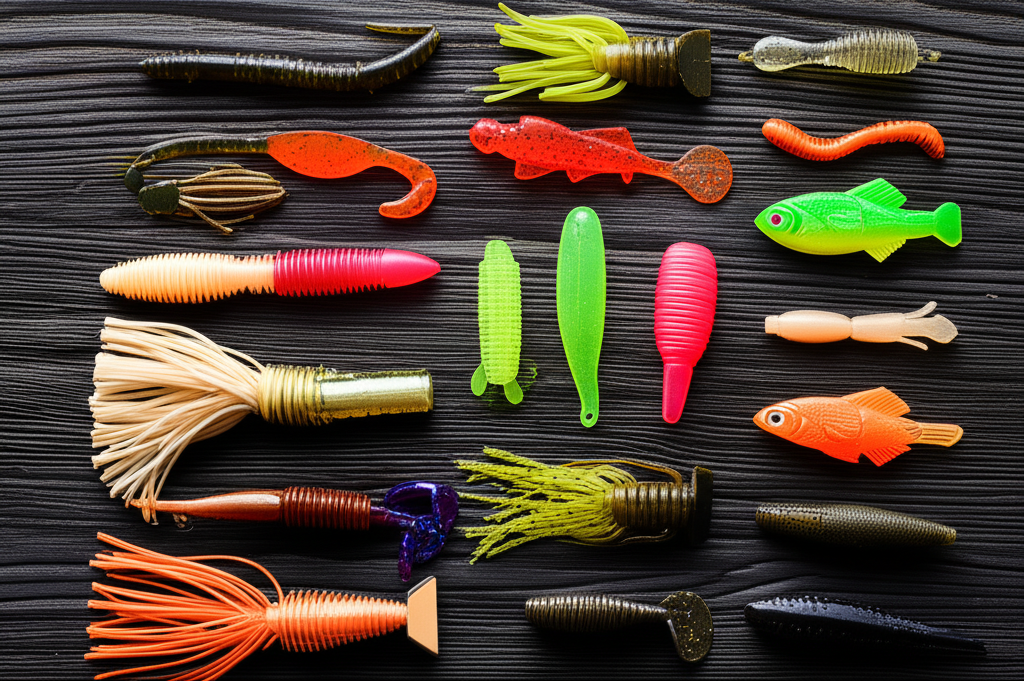
- Tube Bait: A hollow-bodied, soft plastic bait with tentacles that trap air and create a unique spiraling or darting action.
Why carolina rig tube fishing Matters: Key Benefits
In a world of complex new lures, why does this classic technique remain a staple for professional and amateur anglers alike? The answer lies in its unmatched efficiency and its incredibly lifelike presentation. Studies on bass feeding behavior show they often react to baits that mimic distressed or fleeing prey, a role the Carolina-rigged tube plays perfectly.
Unbeatable Search-and-Find Capability
The primary benefit of carolina rig tube fishing is its ability to cover vast amounts of water quickly and effectively. When fish are scattered across a large flat or along a deep contour line, casting and retrieving a single jig or worm can be painstakingly slow. The heavy weight of the Carolina rig allows for exceptionally long casts, and the dragging retrieve lets you systematically comb an area, feeling for changes in bottom composition like gravel, sand, or rock, which are fish-holding magnets. Think of it as sonar for your fishing line; you’re not just fishing, you’re mapping the bottom to find the sweet spots.
Subtle and Natural Bait Presentation
The separation between the weight and the bait is the system’s biggest advantage for generating bites from wary fish. As the heavy sinker plows along the bottom, kicking up silt and making noise, the tube bait floats, darts, and glides weightlessly behind it. This action perfectly imitates a crawfish, goby, or baitfish that has been startled from its hiding place. This natural, erratic movement is often too much for a neutral or negative bass to resist, triggering a reaction strike when other, more aggressive carolina rig techniques fail.
\”The C-Rig with a tube isn’t just a lure; it’s a bottom-scouring system. You’re finding structure and presenting a meal all in one cast. There’s a reason it has won millions of dollars in tournaments.\”
Complete Guide to carolina rig tube fishing – Step-by-Step
Building the perfect carolina rig tube setup is simple once you understand the order and purpose of each component. Following these steps ensures your rig is strong, functional, and ready to catch fish. This process is the foundation of all effective carolina rig fishing.
Step 1: Assemble the Main Line Components
This is the top half of your rig, responsible for weight, sound, and connection. It must be assembled in the correct order to function properly.
- Action Item: Take the end of your main line from your reel and slide on your sinker, pointed end first. A 3/4 oz tungsten bullet weight is a great starting point.
- Action Item: After the sinker, slide on your glass bead. The bead should be large enough that it cannot slip over the eye of the swivel.
- Action Item: Tie the main line to one end of your barrel swivel using a strong knot like the Palomar or Improved Clinch Knot. Cinch it down tightly.
- Expected Outcome: You should have a sinker and bead that can slide freely up and down your main line, stopping at the swivel. When you shake it, you should hear a distinct \”clack.\”
Step 2: Add the Leader and Hook
The leader is what gives your tube its lifelike action. Leader length is a critical variable you can adjust based on conditions.
Start by cutting a piece of leader material, typically a lighter pound-test fluorocarbon than your main line. A good all-around length is 24 inches. Tie one end of the leader to the open end of the barrel swivel. Next, tie your EWG hook to the other end of the leader. The Palomar knot is again an excellent choice for its strength.
Step 3: Rig the Tube Bait
Properly rigging the tube is essential for a weedless presentation and a good hookup ratio. The goal is to have the tube sit straight on the hook shank.
First, insert the hook point into the center of the tube’s head and push it in about a quarter-inch. Then, bring the hook point out the side of the tube. Slide the tube all the way up the hook shank until the head is snug against the hook eye. Finally, turn the hook and embed the point back into the hollow body of the tube, ensuring the point is just barely covered by the plastic (known as \”skin-hooking\”). This makes it weedless but allows for easy penetration on a hookset. Your carolina rig tube fishing setup is now complete.
Expert Tips & Best Practices for carolina rig tube fishing
Simply knowing how to tie the rig is only half the battle. Applying it with the right technique and strategy is what separates successful anglers from frustrated ones. Here are some essential best practices for both newcomers and seasoned veterans.
For Beginners:
- Keep it Slow: The number one mistake beginners make is fishing too fast. Use a slow, steady retrieve, dragging the weight along the bottom. Use your rod, not your reel handle, to move the bait. Pull the rod slowly to the side, then reel up the slack.
- Maintain Bottom Contact: If you can’t feel your weight ticking along the bottom, your rig is too light for the depth or wind. Always use a weight heavy enough to stay on the bottom. This is the most crucial of all carolina rig tube tips.
- Feel the Bite: A bite on a Carolina rig often feels different. It’s rarely a sharp \”thump.\” More often, it will feel \”mushy,\” \”heavy,\” or you’ll just feel pressure. When you feel anything different, set the hook.
For Advanced Users:
- Vary Leader Length: Don’t stick to one leader length. Use a short leader (12-18 inches) when fishing around heavier cover like grass or brush to keep the bait from wrapping. Use a long leader (3-4 feet) in clear, open water to give the bait a more natural, subtle action.
- Incorporate Snaps and Pauses: While a slow drag is standard, don’t be afraid to mix it up. After dragging, give the rod tip a sharp pop or two. This makes the weight jump and causes the tube to dart erratically, triggering reaction strikes from following fish. Experiment with different carolina rig presentations to see what works.
5 Common carolina rig tube fishing Mistakes to Avoid
Avoiding common pitfalls is critical for consistent success with this technique. If you’re not getting bites, there’s a high probability you’re making one of these five mistakes. Correcting them will dramatically improve your results.
Mistake #1: Using the Wrong Rod
The Problem: A short, flimsy rod lacks the power to cast a heavy rig, the length to move a lot of line on the hookset, and the sensitivity to detect subtle bites.
The Solution: Use a long rod (7’3\” to 7’6\”) with a Medium-Heavy or Heavy power and a Fast action tip. This setup provides casting distance, leverage for sweeping hooksets, and the backbone to control large fish.
Mistake #2: The Dreaded \”Snap\” Hookset
The Problem: A traditional, vertical snap hookset is ineffective with a Carolina rig. Because of the sliding weight and long leader, a quick snap often just moves the sinker without driving the hook home.
The Solution: Adopt a sweeping hookset. When you detect a bite, reel down until you feel pressure, then pull the rod hard to the side in a long, sweeping motion. This removes the slack from the leader and uses the rod’s power to bury the hook.
Mistake #3: Neglecting Leader Management
The Problem: Using a leader that is too long or made of the wrong material can lead to poor bite detection, constant tangles, and an unnatural presentation if it’s too stiff.
The Solution: Always use a high-quality fluorocarbon leader. Start with a 24-inch leader and adjust based on conditions. If you’re constantly getting tangled on the cast, shorten it slightly or make a more lobbing, smooth cast instead of a hard snap cast.
Mistake #4: Incorrect Weight Selection
The Problem: Too light, and you lose bottom contact. Too heavy, and you’ll constantly snag in cover and potentially spook fish with an unnatural \”thud\” as it lands.
The Solution: Use the lightest weight you can get away with while still maintaining constant feel of the bottom. In most situations from 10-25 feet, a 3/4 oz weight is perfect. Switch to a 1 oz weight for deeper water or windy conditions.
Mistake #5: Choosing the Wrong Tube
The Problem: Not all carolina rig tubes are created equal. Using a tube that is too stiff, has too much salt (causing it to sink), or is the wrong profile can kill the rig’s action.
The Solution: Select a tube made from soft, pliable plastic with hollow bodies that trap air. This enhances buoyancy and creates the desired spiraling action on the fall and glide during the retrieve. Match the size (3.5\” to 4.5\”) to the local forage.
Advanced carolina rig tube fishing Strategies for 2024/2025
As technology and angling pressure evolve, so do the techniques. To stay ahead of the curve, modern anglers are refining their approach to carolina rig tube fishing with new gear and electronics. These strategies can turn a good day into a great one.
Tungsten Weights and Forward-Facing Sonar
The biggest evolution in bottom-contact fishing is the widespread adoption of tungsten weights. Tungsten is much denser than lead, meaning a 1 oz tungsten weight is nearly half the size of a 1 oz lead weight. This smaller profile reduces snags and provides dramatically increased sensitivity. You can feel the difference between sand, gravel, and mud with incredible clarity, helping you find key spots. Combined with modern forward-facing sonar (FFS), carolina rig bass fishing has become a precision technique. Anglers can now use FFS to locate specific fish or small pieces of cover, make a long cast past the target, and drag the rig right through the strike zone with pinpoint accuracy.
The \”Lift and Drop\” retrieve
Instead of a simple side-drag, a more advanced retrieve involves a \”lift and drop.\” After your rig hits the bottom, slowly lift your rod tip from the 3 o’clock to the 11 o’clock position. This pulls the weight up and off the bottom, causing the tube to dart upward. Then, slowly lower the rod, allowing the rig to fall on a semi-slack line. The tube will spiral and glide back to the bottom, a movement that often triggers bites from bass that are following the bait. This is one of the most effective carolina rig presentations in clearer water.
Essential Tools & Resources for carolina rig tube fishing
Having the right equipment is non-negotiable for effective carolina rig tube fishing. The wrong gear will lead to frustration, missed bites, and lost fish. Here’s a breakdown of the ideal tools and resources.
Recommended Tools:
- Rod: 7’3\” – 7’6\” Medium-Heavy power, Fast action casting rod. The length is key for long casts and effective hooksets. Brands like St. Croix, G. Loomis, and Dobyns make excellent C-rig rods.
- Reel: A high-quality casting reel with a 7.1:1 to 8.1:1 gear ratio. A faster reel helps you pick up slack quickly for a solid hookset. Look for a smooth, strong drag system.
- Line: 17-20 lb fluorocarbon main line and 12-15 lb fluorocarbon leader line. Fluorocarbon’s low stretch and near-invisibility are perfect for this technique.
- Components: High-quality barrel swivels (size 5-7), 8mm glass beads, 3/0-5/0 EWG hooks, and 1/2 to 1 oz tungsten bullet weights. Don’t skimp on terminal tackle.
Additional Resources:
- YouTube Channels: Watch professional anglers like Kevin VanDam and Brandon Palaniuk. They often provide invaluable on-the-water demonstrations of carolina rig techniques.
- Lake Mapping Apps: Services like Navionics or Humminbird LakeMaster allow you to study contour maps before you hit the water. This helps you identify promising points, humps, and flats where this rig excels.
Frequently Asked Questions About carolina rig tube fishing
Q1: What are the best carolina rig tube colors for various conditions?
Answer: The choice of carolina rig tube colors should be based on water clarity and local forage. For clear water, natural colors like Green Pumpkin, Watermelon Red, and Smoke are top producers. In stained or muddy water, darker colors with more contrast, such as Black/Blue Flake, Junebug, or Green Pumpkin/Chartreuse, are more visible to the fish and draw more strikes. Always try to \”match the hatch\” by imitating the color of local crawfish or baitfish.
Q2: What is the ideal leader length for carolina rig fishing?
Answer: There’s no single perfect length; it’s situational. A great starting point is 18-24 inches. Use a shorter leader (12-18 inches) in murky water or around vegetation to keep the bait close to the sound-producing weight. Use a longer leader (3-4 feet) in very clear water or when fish are highly pressured, as it gives the tube a more natural, detached appearance.
Q3: Can I use a braided main line for carolina rig tube fishing?
Answer: Yes, you can, and it’s a popular choice. Using a 30-50 lb braided main line provides incredible sensitivity and zero stretch for powerful hooksets. However, you must always use a long fluorocarbon leader (from the swivel to the hook, and often a 6-10 foot leader from the braid to the swivel) because braid is highly visible underwater and can spook fish. The fluorocarbon leader provides the necessary invisibility at the terminal end.
Q4: How do I know when I have a bite on a Carolina rig?
Answer: This is one of the trickiest parts of the technique. Because of the slack leader, a bite rarely feels like a sharp \”tick.\” Instead, focus on detecting changes. You may feel a spongy or mushy weight, a slight \”pressure,\” or the line may simply start moving sideways. If anything feels different from the normal drag of the weight on the bottom, reel up the slack and perform a sweeping hookset. When in doubt, set the hook—it’s free!
Conclusion: Master carolina rig tube fishing for Long-term Success
Carolina rig tube fishing is far more than just dragging a bait behind a weight; it’s a systematic approach to locating and catching bass in a variety of conditions. By understanding the components, mastering the retrieve, and avoiding common mistakes, you can turn this technique into one of your most reliable fish-catchers. Remember to focus on slow, deliberate presentations and pay close attention to what your line is telling you about the bottom.
As you gain confidence, continue to experiment with leader lengths, weights, and carolina rig tube colors to fine-tune your approach. The versatility of this rig ensures it will remain a cornerstone of successful carolina rig bass fishing for years to come. Now, get out on the water, apply these tips, and experience the subtle power of a perfectly presented tube.
Related Articles You Might Find Helpful:
- Advanced Carolina Rig Techniques for Pressured Bass
- Top 5 Soft Plastic Baits for Bass Fishing in 2024
- How to Read Your Electronics to Find Offshore Structure
What’s Your carolina rig tube fishing Experience?
What’s your go-to tube color or leader length for your home waters? Share your best tips or biggest challenges with the Carolina rig in the comments below!
Note: This guide reflects current best practices and is updated regularly to ensure accuracy. Last updated: September 15, 2023