Master Jig Head Grub Fishing: The Ultimate Guide
Ever feel like you’re overcomplicating your fishing approach, staring at a tackle box overflowing with complex lures that don’t always deliver? There’s a timeless, devastatingly simple solution that consistently catches fish when nothing else will. We’re talking about jig head grub fishing, a foundational technique that has out-fished expensive, trendy lures for decades. This guide strips away the complexity and dives deep into mastering this versatile method. We will cover everything from the basic setup to advanced presentations, ensuring you have the confidence to make this your go-to technique for consistent success on the water.
Whether you’re a seasoned angler looking to refine your skills or a beginner searching for a reliable starting point, this comprehensive jig head grub guide is for you. We understand the frustration of a slow day and the desire for a method that works across different conditions and for various species. This post will transform your understanding of jig head grub fishing, providing actionable insights that you can apply on your very next trip. Get ready to simplify your tackle and amplify your results.
Table of Contents
- What is jig head grub fishing?
- Key Benefits and Importance
- Complete Step-by-Step Guide
- Expert Tips & Best Practices
- Common Mistakes to Avoid
- Advanced Strategies for 2024/2025
- Essential Tools & Resources
- Frequently Asked Questions
What is jig head grub fishing?
Jig head grub fishing is a highly effective angling technique that involves pairing a simple lead-head jig with a soft-plastic, curl-tail grub. This combination creates an incredibly lifelike imitation of baitfish, crawfish, or other aquatic forage that predatory fish find irresistible. Its simplicity is its greatest strength, allowing for a wide range of presentations and retrieves.
At its core, the technique leverages the weight of the jig head to get the bait to the desired depth and the action of the grub’s tail to create enticing movement. This fundamental approach is central to many other lure presentations, making a mastery of jig head grub fishing a cornerstone of versatile angling. Understanding the nuances of the jig head grub setup, various jig head grub techniques, and proper presentation is key. Whether you’re targeting smallmouth in a river or largemouth in a lake, the jig head grub is a must-have in your arsenal, particularly for jig head bass fishing where it excels in both numbers and size.
Key Components
- Jig Head: This is the weighted hook, typically with a round, football, or darter-shaped head. Its weight determines the lure’s fall rate and running depth, making it the most critical part of your jig head grub setup.
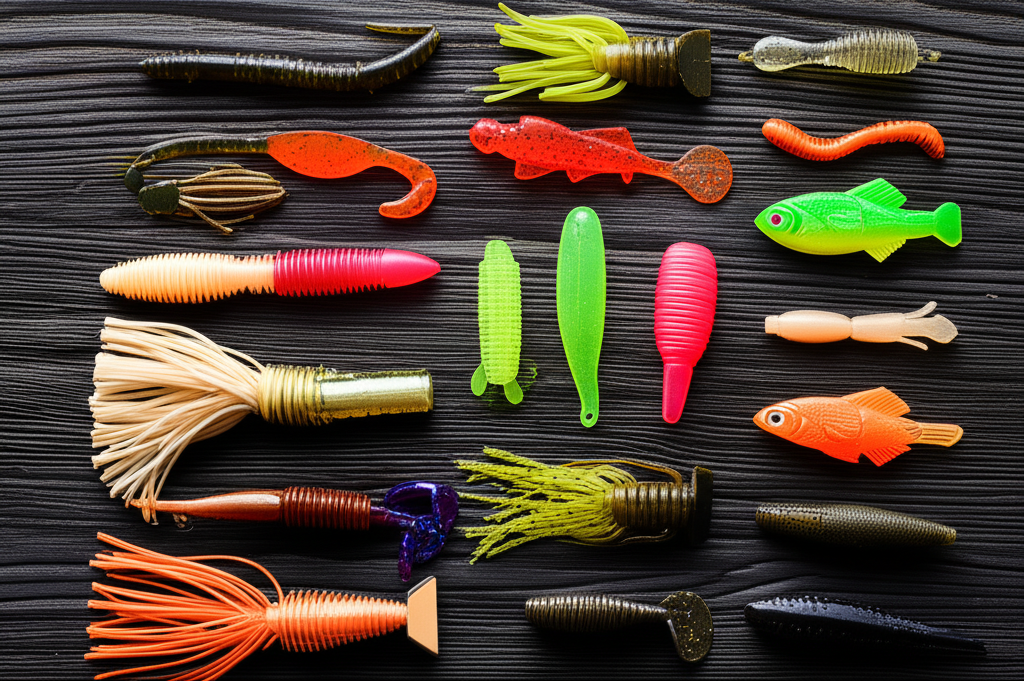
- Soft-Plastic Grub: The body of the lure, most often a single or twin-tail grub. The tail provides the swimming action as the lure moves through the water, a key factor in a successful jig head grub presentation.
- Rod and Reel: A light to medium-power spinning rod with a fast action is ideal. It provides the sensitivity needed to detect subtle bites common with jig head grub fishing.
- Fishing Line: Light-test fluorocarbon or monofilament line (6-10 lb) is standard. Fluorocarbon is often preferred for its low visibility and sensitivity, which helps in feeling the lightest of takes.
Why jig head grub fishing Matters: Key Benefits
In a world of high-tech, high-priced lures, the humble jig head grub continues to hold its own for one simple reason: it works. The universal appeal of a small, vulnerable-looking meal is hardwired into the DNA of predatory fish. This makes jig head grub fishing not just a technique, but a fundamental strategy for anglers of all skill levels. It’s often the first lure a new angler learns and the last one a professional trusts when the bite gets tough.
Unmatched Versatility
The single greatest benefit of jig head grub fishing is its incredible versatility. By simply changing the weight of the jig head, the size of the grub, or the retrieve speed, you can effectively target fish in a vast range of scenarios. For example, you can use a light 1/16 oz jig head with a 3-inch grub to swim slowly over shallow weed flats for crappie. On the other hand, you can switch to a heavy 1/2 oz football head with a 5-inch grub to dredge deep rocky points for big smallmouth bass. This adaptability means one simple lure can cover the entire water column, from top to bottom, in lakes, rivers, and ponds.
Cost-Effectiveness and Simplicity
Fishing can be an expensive hobby, but jig head grub fishing is refreshingly affordable. A pack of 100 grubs and a dozen jig heads can cost less than a single high-end crankbait. This low cost encourages experimentation and allows anglers to fish in heavy cover without the fear of losing an expensive lure. This simplicity extends to the setup itself, which requires no complex rigging or specialized knots. It’s a pure, direct connection between the angler and the lure, fostering a better feel for what’s happening underwater. The effectiveness of jig head grub bass fishing relies on this simple, direct approach.
“Never underestimate the power of a simple grub. It’s the one bait that mimics nearly every type of forage in an ecosystem. When in doubt, tie on a jig and grub.”
Complete Guide to jig head grub fishing – Step-by-Step
Mastering jig head grub fishing is a process of understanding the gear, perfecting the rigging, and executing the right presentation. Follow these steps to build a solid foundation that will lead to more consistent catches. This is your essential jig head grub guide to getting started.
Step 1: Selecting the Right Gear (Your Jig Head Grub Setup)
Your success begins with a balanced setup. The goal is sensitivity and control. A poor gear choice can mask subtle bites and hinder your ability to present the lure effectively.
- Rod Selection: Choose a 6’6″ to 7′ spinning rod with a Medium-Light or Medium power and a Fast action tip. This provides the backbone to handle fish but has a sensitive tip to detect light bites.
- Reel and Line: A 2000 or 2500-size spinning reel is perfect. Spool it with 6 to 8-pound test fluorocarbon line. Fluorocarbon is nearly invisible underwater and offers excellent sensitivity, crucial for this finesse technique.
- Jig Head and Grub: Start with a 1/8 oz round ball jig head and a 3-inch single-tail grub. This is the most versatile combination for a wide range of depths and conditions. Having weights from 1/16 oz to 1/4 oz will cover most situations.
Step 2: Rigging the Grub for Perfect Action
How you put the grub on the hook is critical. An improperly rigged grub will spin unnaturally and fail to attract fish. The key is to make it perfectly straight.
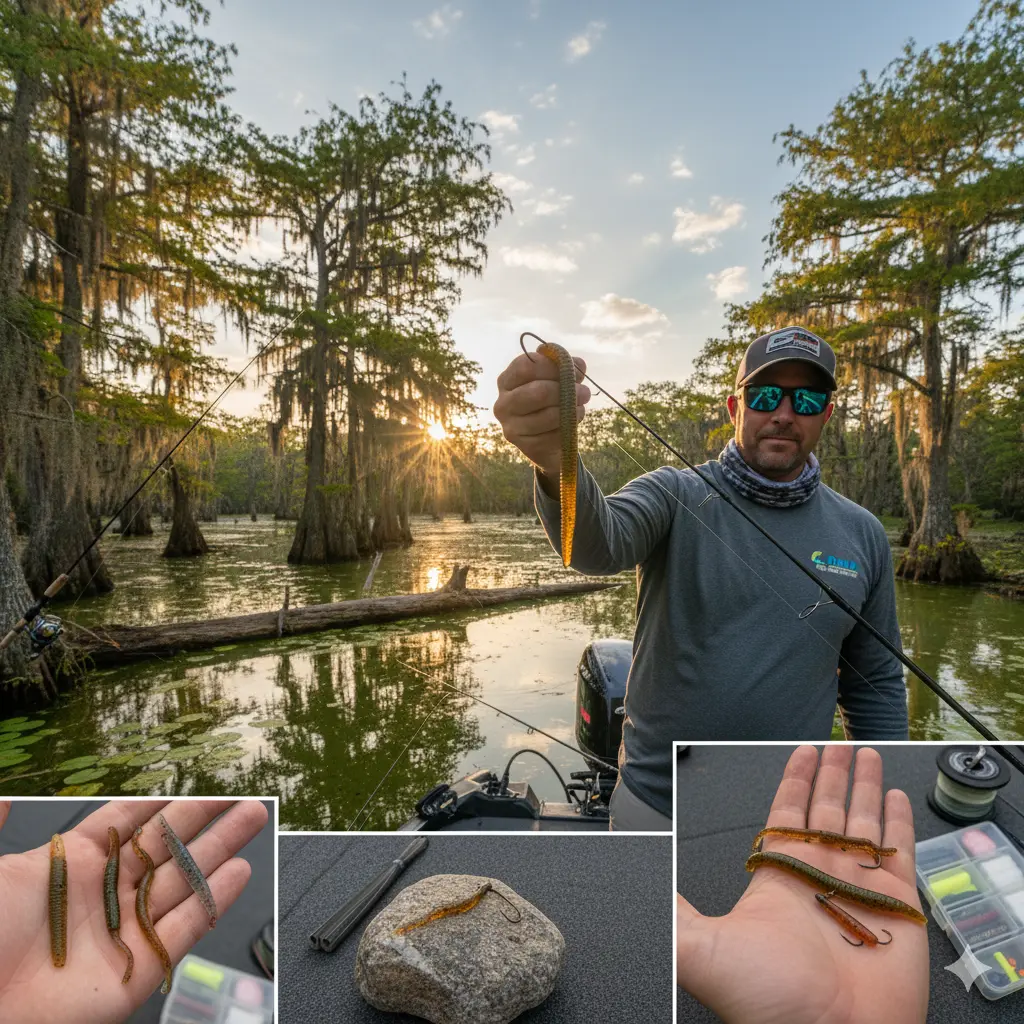
First, lay the grub alongside the jig head to visualize where the hook point should exit the grub’s back. Insert the hook point directly into the center of the grub’s nose. Gently thread the grub up the hook shank, following the hook’s curve. Push the hook point out through the back of the grub at your predetermined exit point. Ensure the grub is straight on the hook shank, not bunched up or bent. A straight grub ensures the tail can kick and swim freely, which is the heart of a good jig head grub presentation.
Step 3: Casting and Mastering the Presentation
Once you’re rigged up, it’s time to fish. The beauty of jig head grub fishing lies in the variety of retrieves you can use.
Start with the most basic and effective retrieve: the steady swim. Cast out, let the grub sink to your desired depth (counting it down is a good practice), and then begin a slow, steady retrieve. You want the reel speed to be just fast enough to make the grub’s tail kick. Another popular technique, especially for bass, is the “hop and drop.” Cast out, let the grub hit the bottom, then lift your rod tip from the 9 o’clock to 11 o’clock position to hop the grub off the bottom. Reel in the slack as you lower the rod tip and let the grub fall back down. Most bites will occur as the grub is falling, so pay close attention to your line.
Expert Tips & Best Practices for jig head grub fishing
Following a few best practices can dramatically increase your success rate with jig head grub fishing. These jig head grub tips are designed to help both newcomers and experienced anglers fine-tune their approach and catch more fish consistently.
For Beginners:
- Start with a Light Jig: Use the lightest jig head you can get away with while still maintaining contact with the bottom or your desired depth. A lighter jig provides a slower, more natural fall, which often triggers more bites.
- Match the Hatch: Pay attention to the local baitfish. Try to match your jig head grub colors to the natural forage. Basic colors like white, smoke, chartreuse, and pumpkinseed will cover most situations.
- Feel is Everything: Focus on feeling what your lure is doing. Is it ticking over rocks? Dragging through mud? Bouncing off wood? This sensitivity is key to detecting strikes, which can often feel like a subtle “tick” or just a mushy weight on the line.
For Advanced Users:
- The Pendulum Effect: Master the pendulum fall. After you cast, instead of letting the grub fall on a completely slack line, keep a slight tension. This causes the grub to swing or “pendulum” back toward you as it sinks, covering more water and often triggering strikes from suspended fish.
- Line Watching: Become an obsessive line watcher. Many bites, especially in cold water, won’t be felt. You’ll simply see your line jump, twitch, or start moving sideways. If you see anything unusual, set the hook! This is one of the most effective jig head grub techniques for finicky fish.
5 Common jig head grub fishing Mistakes to Avoid
Even a simple technique like jig head grub fishing has pitfalls that can limit your success. Avoiding these common mistakes will ensure your lure is presented effectively, leading to more bites and fewer frustrating days on the water.
Mistake #1: Using a Jig Head That’s Too Heavy
The Problem: Anglers often default to heavier jigs to cast farther and feel the bottom easier. However, a heavy jig plummets to the bottom unnaturally fast, killing the subtle action of the grub on the fall. This can spook fish and significantly reduce bites.
The Solution: Always default to the lightest weight you can effectively fish. A 1/8 oz or even a 1/16 oz jig will provide a much more natural, slow-spiraling descent that mimics injured prey. This is a critical adjustment for effective jig head grub fishing.
Mistake #2: A Crookedly Rigged Grub
The Problem: If the grub is not threaded perfectly straight onto the hook shank, it will spin and helicopter through the water instead of swimming. This unnatural movement is a major fish repellent.
The Solution: Take your time when rigging. As described in our guide, measure the hook against the grub before inserting it. Ensure the body is perfectly aligned and straight. If it looks even slightly off, take it off and re-rig it. It’s worth the extra ten seconds.
Mistake #3: Neglecting Color and Size Adjustments
The Problem: Sticking to one favorite color or size regardless of conditions. Water clarity, available forage, and light conditions all influence which jig head grub colors and sizes will be most effective.
The Solution: Carry a small variety of colors and sizes. A good starting point: natural colors (smoke, green pumpkin) for clear water, and brighter colors (chartreuse, white) for stained water. Match grub size to the prevalent baitfish.
Mistake #4: An Overly Aggressive Retrieve
The Problem: Many anglers work the grub too fast and too erratically. While an aggressive hop can sometimes trigger a reaction strike, the grub’s subtle tail action is most effective with a slow, steady, or methodical presentation.
The Solution: Slow down. Let the grub’s tail do the work. A simple, slow swimming retrieve is often the deadliest of all jig head grub techniques. Let the lure’s design create the action.
Mistake #5: Using the Wrong Rod and Line
The Problem: A heavy baitcasting rod with a thick line will completely deaden the feel of a light jig and grub. You won’t be able to detect subtle bites or impart the right action to the lure.
The Solution: Commit to a dedicated spinning setup. A light or medium-light rod with 6-8 lb test line is non-negotiable for effective jig head grub fishing, especially when targeting jig head grub bass in pressured waters.
Advanced jig head grub fishing Strategies for 2024/2025
As technology evolves, so do fishing techniques. While jig head grub fishing is timeless, modern electronics and refined approaches are unlocking new levels of effectiveness. Here are some cutting-edge strategies for 2024/2025.
Video Game Fishing with Forward-Facing Sonar
The rise of forward-facing sonar (FFS) has revolutionized fishing, and it’s a perfect match for the subtle art of jig head grub fishing. Anglers can now identify individual fish or schools of bait and make precise casts to them. With FFS, you can watch your grub descend in real-time and see exactly how fish react to your jig head grub presentation. You can hover the grub right above a fish’s head, shake it in place, or swim it away to trigger a chase response. This turns fishing into a live-action video game and is arguably the most significant advancement in jig head bass fishing in a generation.
Strolling and Moping for Suspended Fish
This technique, sometimes called “moping,” is deadly on suspended bass, walleye, or crappie that are notoriously hard to catch. It involves using your trolling motor to move the boat very slowly (0.3-0.7 mph) while keeping a light jig and grub directly below the boat, just above the depth where you’re marking fish on your sonar. The subtle forward movement of the boat is just enough to make the grub’s tail undulate seductively. This ultra-subtle presentation can coax bites from neutral or inactive fish that would ignore a faster-moving lure. It’s a game of patience that pays huge dividends.
Essential Tools & Resources for jig head grub fishing
Having the right tools and knowledge resources can streamline your jig head grub fishing and accelerate your learning curve. Here are a few essentials we recommend.
Recommended Tools:
- High-Modulus Graphite Spinning Rod: A rod made from high-modulus graphite is lighter and more sensitive than standard graphite or fiberglass. This translates directly to feeling more bites. Look for brands known for sensitivity.
- Quality Fluorocarbon Line: Don’t skimp on your line. Premium brands of fluorocarbon offer better abrasion resistance, lower visibility, and enhanced sensitivity. This is your direct link to the lure.
- Tungsten Jig Heads: While more expensive than lead, tungsten jig heads are smaller for their weight and significantly harder. This provides a much better feel for the bottom composition, allowing you to distinguish between rock, sand, and mud with ease.
Additional Resources:
- Online Angling Forums: Websites and forums dedicated to bass or multi-species fishing are treasure troves of information. You can find regional reports, gear reviews, and specific jig head grub tips from experienced local anglers.
- YouTube Fishing Channels: Visual learning is powerful. Many professional anglers and fishing educators have detailed videos demonstrating jig head grub techniques, from rigging to specific retrieves for different conditions.
Frequently Asked Questions About jig head grub fishing
Q1: What is the best all-around jig head grub setup for a beginner?
Answer: For a beginner, the ideal jig head grub setup is a 7′ Medium-Light power, Fast action spinning rod paired with a 2500-size reel. Spool it with 8-pound test fluorocarbon line. For the lure, start with a 1/8 oz round ball jig head and a 3-inch, single-tail grub in a versatile color like smoke or watermelon. This combination is balanced, easy to cast, and effective for a wide variety of species, making it a perfect starting point for learning jig head grub fishing.
Q2: In what conditions is jig head grub fishing most effective?
Answer: Jig head grub fishing excels in a wide range of conditions, but it is particularly deadly in clear to moderately stained water and when fish are pressured or finicky. It’s a go-to technique in post-frontal conditions (high blue skies after a storm) when fish are less aggressive. It’s also highly effective in the colder water of spring and fall when baitfish are a primary food source for bass and other predators. The subtle action often outproduces aggressive lures when the bite is tough.
Q3: How do I choose the right jig head grub colors for different water clarities?
Answer: A great rule of thumb for choosing jig head grub colors is to match your selection to the water clarity. In clear water, opt for natural, translucent colors like smoke, watermelon, green pumpkin, or light brown to mimic natural forage. In stained or dirty water, you need colors that stand out. Brighter, solid colors like white, chartreuse, pink, or black are much more visible and will draw more strikes. Consider a two-tone grub for added contrast.
Q4: Can I effectively use this technique for jig head grub bass fishing in deep water?
Answer: Absolutely. Jig head grub bass fishing is an excellent deep-water technique. The key is to adjust your jig head weight. While a 1/8 oz jig works well in shallow water, you’ll need to upgrade to a 1/4 oz, 3/8 oz, or even 1/2 oz jig head to efficiently reach depths of 20, 30, or even 40 feet. Pair the heavier head with a larger 4 or 5-inch grub to create a more substantial profile. Use a dragging or hopping jig head grub presentation to keep the lure in the strike zone along the bottom.
Conclusion: Master jig head grub fishing for Long-term Success
The art of jig head grub fishing is a testament to the idea that simplicity often breeds success. By mastering this fundamental technique, you equip yourself with a universally effective tool that can produce results in almost any condition, for nearly any species. From the basic setup to the nuances of presentation, you now have a complete roadmap to becoming proficient with this timeless fish-catcher.
As you move forward, continue to experiment with different jig head grub colors, weights, and retrieves. The future of angling will always have a place for foundational jig head grub techniques, as they provide a reliable baseline against which all other lures are measured. Embrace the simplicity, refine your feel, and make jig head grub fishing a cornerstone of your angling success for years to come.
Related Articles You Might Find Helpful:
- Advanced Jig Head Grub Techniques for Pressured Bass
- How to Choose the Perfect Jig Head Grub Setup
- Top 5 Jig Head Grub Colors for All Water Conditions
What’s Your jig head grub fishing Experience?
Do you have a favorite color combination or a go-to retrieve that always works for you? Share your best jig head grub tips or success stories in the comments below! We’d love to hear from you.
Note: This guide reflects current best practices and is updated regularly to ensure accuracy. Last updated: October 18, 2023