Master Drop Shot Tube Fishing: Your Ultimate Guide
Are you tired of staring at your fish finder, seeing suspended bass that simply refuse to bite? This common frustration plagues anglers everywhere, but the solution is often a simple change in presentation. For those tough, high-pressure days, mastering the art of drop shot tube fishing can be the single most effective way to turn a slow day into a memorable one. This comprehensive guide breaks down everything you need to know, from the fundamental setup to advanced strategies that will put you ahead of the competition. We’ll explore why this finesse technique is a must-have in your arsenal.
This isn’t just another overview; it’s a deep dive into the nuances that separate casual anglers from seasoned pros. We will cover the specific gear, the subtle movements, and the critical mistakes to avoid. Whether you’re a beginner looking to learn a new skill or an experienced angler wanting to refine your approach, this guide provides the actionable insights you need for success in drop shot tube fishing.
Table of Contents
- What is drop shot tube fishing?
- Key Benefits and Importance
- Complete Step-by-Step Guide
- Expert Tips & Best Practices
- Common Mistakes to Avoid
- Advanced Strategies for 2024/2025
- Essential Tools & Resources
- Frequently Asked Questions
What is drop shot tube fishing?
Drop shot tube fishing is a finesse angling technique that combines the vertical presentation of a drop shot rig with the unique, spiraling action of a soft plastic tube bait. The setup suspends the tube off the bottom, allowing it to flutter and spiral enticingly in the strike zone with minimal rod movement. This makes it an incredibly effective method for targeting finicky, suspended, or bottom-hugging fish.
At its core, this method is a cornerstone of modern drop shot bass fishing, offering a different look than standard worms or minnow baits. Understanding the key components of the drop shot tube setup is the first step toward mastering various drop shot techniques. This complete drop shot tube guide will walk you through everything from selecting the right drop shot tubes and drop shot tube colors to executing perfect drop shot presentations. Mastering this style of drop shot fishing is a game-changer.
Key Components
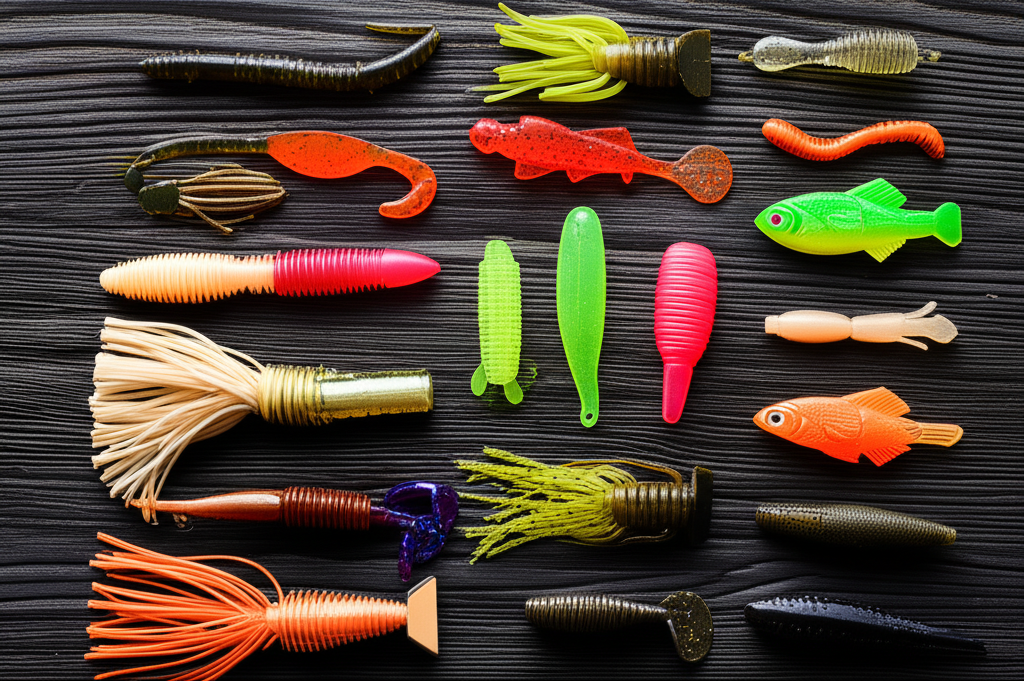
- Tube Bait: The star of the show. Its hollow body traps air, creating a neutral buoyancy and a unique, erratic spiraling action as it falls or is twitched.
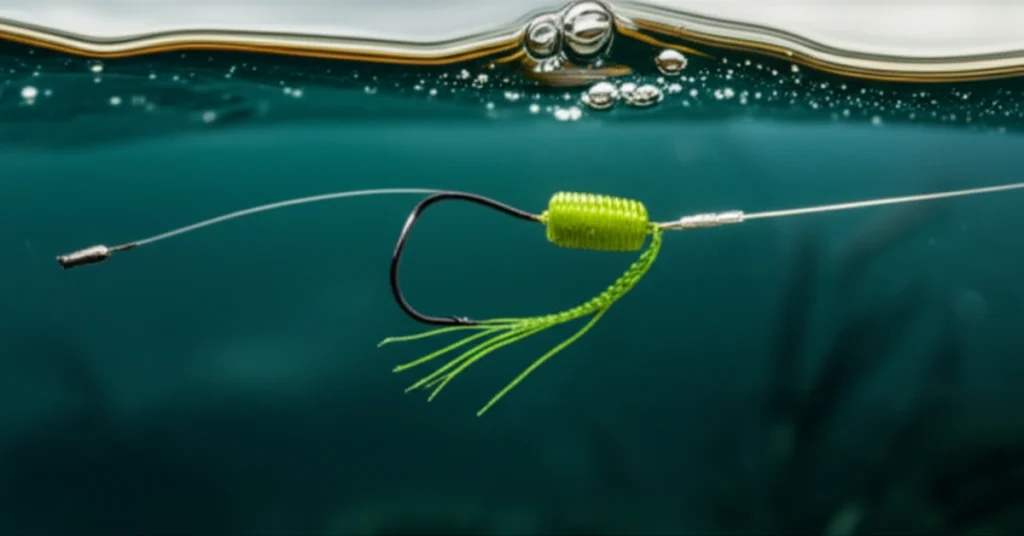
- Drop Shot Hook: Typically a size 1, 1/0, or 2/0 octopus or specialized drop shot hook. It’s designed to be tied directly to the line, pointing upward for optimal hooksets.
- Drop Shot Weight: A cylindrical or teardrop-shaped weight attached to the tag end of the line. This component keeps the rig anchored to the bottom while the bait floats freely above it.
- Leader Line: Almost always a low-visibility fluorocarbon line, which is crucial for this finesse technique as it’s nearly invisible underwater and offers excellent sensitivity.
Why drop shot tube fishing Matters: Key Benefits
In today’s highly pressured fisheries, bass quickly become conditioned to common lures. The subtle, natural presentation of drop shot tube fishing provides a unique advantage that can trigger bites when nothing else will. Its ability to keep a bait perfectly positioned in the strike zone for extended periods is unmatched by almost any other technique.
Unmatched Finesse for Pressured Fish
The primary benefit lies in its subtlety. When bass are lethargic due to cold fronts, fishing pressure, or clear water conditions, they are less likely to chase aggressive baits. The drop shot tube setup allows you to impart lifelike action to the tube with simple shakes of the rod tip, all while the weight remains stationary on the bottom. This subtle dance perfectly mimics a dying baitfish or emerging crawfish, an easy meal that wary bass can’t resist. On lakes that see hundreds of boats a week, this finesse approach is often the only way to get consistent bites.
Superior Vertical Presentations
When you locate fish on your electronics, especially those suspended off the bottom or holding tight to specific structures like rock piles or brush, drop shot tube fishing allows for surgical precision. You can drop the rig directly onto the target and hold it there. The tube’s fluttering action on a slack or semi-slack line is deadly in these vertical scenarios, something a Texas rig or jig simply cannot replicate with the same effectiveness. It’s the ultimate tool for converting sonar sightings into landed fish.
“The drop shot tube combines two of the most effective finesse presentations ever created. Its ability to spiral on the fall and quiver in place gives you an unparalleled tool for fooling educated smallmouth and largemouth.”
Complete Guide to drop shot tube fishing – Step-by-Step
Creating the perfect drop shot tube setup is straightforward, but attention to detail is critical for maximizing its effectiveness. This step-by-step process ensures you build a rig that is sensitive, strong, and presents the bait perfectly every time. This is a foundational part of our drop shot tube guide.
Step 1: Assembling Your Rod, Reel, and Line
Your gear is your connection to the fish, and for finesse techniques, it’s paramount. The right setup transmits the subtle vibrations of a bite directly to your hand.
- Rod: Choose a 6’10\” to 7’4\” spinning rod with a medium-light or medium power and a fast or extra-fast action. The sensitive tip helps detect light bites, while the strong backbone provides hook-setting power.
- Reel: A 2500 or 3000-size spinning reel with a smooth drag system is ideal. A quality drag is non-negotiable for fighting big fish on light line.
- Line: Spool your reel with 10-15 lb braided line as your main line for its no-stretch sensitivity. Then, connect a 6-12 ft leader of 6-10 lb fluorocarbon using an FG knot or a small swivel. The fluorocarbon is nearly invisible and abrasion-resistant.
Step 2: Tying the Drop Shot Rig
The knot is the heart of the rig. The Palomar knot is the industry standard because it’s strong and keeps the hook positioned correctly. After tying the knot, pass the tag end back through the hook eye from the top. This forces the hook point to stand out at a 90-degree angle from the line, ensuring better hookups. Your hook should be anywhere from 8 to 24 inches above the tag end of your line, depending on how high fish are suspended.
Step 3: Rigging the Tube and Attaching the Weight
The final step is to add your bait and weight. For open water, simply nose-hook the tube through its solid head for the most natural, unimpeded action. If you’re fishing around weeds or wood, Texas-rig the tube on an \”Extra Wide Gap (EWG)\” hook to make it weedless. Finally, clip your drop shot weight onto the tag end of the line. The weight’s size should be just enough to maintain bottom contact; 1/4 oz is a great starting point, but you may need to go up to 1/2 oz or more in deep water or current.
Expert Tips & Best Practices for drop shot tube fishing
Following best practices can dramatically increase your success rate with drop shot tube fishing. These simple yet effective drop shot tube tips are designed to help anglers of all skill levels get more bites and land more fish. Adhering to these principles separates occasional success from consistent results.
For Beginners:
- Master Slack Line Control: The magic of the tube happens on a semi-slack line. After your weight hits the bottom, reel up the slack until you feel the weight, then lower your rod tip slightly. This allows the tube to float naturally and respond to subtle currents and twitches.
- Less is More: Avoid aggressive jigging motions. The best action comes from gently shaking the rod tip on that semi-slack line. This makes the tube quiver and dance in place without moving the weight, a key element of effective drop shot presentations.
- Start with Natural Colors: When in doubt, \”match the hatch.\” Start with proven drop shot tube colors like green pumpkin, watermelon red flake, or smoke. These imitate common forage like gobies, perch, and crawfish, making them reliable choices in most water clarities.
For Advanced Users:
- \”Strolling\” the Rig: In open water, instead of keeping the bait stationary, use your trolling motor on a low setting to slowly drag the rig along the bottom. This \”strolling\” technique covers water while keeping the tube dancing just above the substrate, an incredibly effective way to find and trigger schools of smallmouth.
- Match Tube Profile to Forage: Pay close attention to the local baitfish. If the primary forage is slender shiners, use a thinner profile tube. If it’s bulky gobies or crawfish, use a fatter, shorter tube. This level of detail in your selection of drop shot tubes can make a huge difference.
5 Common drop shot tube fishing Mistakes to Avoid
Even seasoned anglers can fall into bad habits. Avoiding these common mistakes is crucial for maximizing the potential of drop shot tube fishing and ensuring you’re not unknowingly sabotaging your efforts. A small correction can lead to a big increase in your catch rate.
Mistake #1: Overworking the Bait
The Problem: Many anglers transitioning from power fishing techniques tend to jig or hop the rig aggressively. This negates the primary advantage of the drop shot, which is its subtle, natural presentation. An overworked tube looks unnatural and can spook finicky bass.
The Solution: Let the rig and the water do the work. Once your weight is on the bottom, maintain a semi-slack line and use gentle shakes and quivers of the rod tip. Often, the best action is no action at all—just let the tube sway with the current.
Mistake #2: Using the Wrong Hook
The Problem: A hook that is \”too large,\” \”too small,\” or has the wrong shape can lead to poor bait action and missed fish. An oversized hook can kill the tube’s subtle flutter, while a hook that’s too small won’t have the bite to secure a solid hookset.
The Solution: Match your hook to your tube size. For most 2.5- to 3.5-inch tubes, a size 1 or 1/0 drop shot/octopus hook is perfect. Ensure the hook point is exposed when nose-hooking or has enough gap to penetrate when Texas-rigging.
Mistake #3: Ignoring Line Twist
The Problem: Spinning reels are prone to creating line twist, and the spiraling action of a tube can exacerbate the issue. Over time, line twist weakens your line, causes frustrating tangles, and can ruin a fluorocarbon leader.
The Solution: After every few fish, let out a long length of line behind the boat (with no bait or weight attached) and let the water’s drag untwist it. Alternatively, incorporating a high-quality micro-swivel a few feet above your hook can significantly reduce twist buildup.
Mistake #4: Incorrect Weight Size
The Problem: Using a weight that is too heavy deadens the feel and can cause you to drag the bait unnaturally. A weight that is too light will be difficult to keep on the bottom, especially in wind or current, and reduces your sensitivity.
The Solution: Use the lightest weight possible while still maintaining consistent bottom contact. In calm, shallow water, 1/8 oz or 3/16 oz may be enough. In deeper water (20+ feet) or wind, step up to 1/4 oz or 3/8 oz. The goal is to feel the bottom, not anchor to it.
Mistake #5: A Hard, Sweeping Hookset
The Problem: The hookset for drop shot fishing is different from a Texas rig hookset. A powerful, sweeping hookset can rip the small hook out of the fish’s mouth or break the light line.
The Solution: When you feel a bite, which often feels like a \”tick\” or just pressure, simply reel down fast and lift the rod firmly. This is often called a \”reel-set.\” The small, sharp hook and taut line will do the work of embedding the hook point securely.
Advanced drop shot tube fishing Strategies for 2024/2025
As technology evolves, so do fishing techniques. Staying ahead of the curve with your drop shot tube fishing means integrating modern tools and adapting classic approaches. These cutting-edge strategies are what the pros are using right now to gain an edge.
Integrating Forward-Facing Sonar
Forward-facing sonar (FFS) like Garmin LiveScope or Lowrance ActiveTarget has revolutionized drop shot bass fishing. With FFS, you can watch fish react to your lure in real-time. Drop your tube rig and position it just above an individual fish you see on the screen. Quiver the bait, and if the fish doesn’t react, change your cadence or let the tube fall slightly. This \”video game fishing\” allows for incredibly precise drop shot presentations and removes all guesswork, turning followers into biters.
Power-Shotting with Heavier Gear
While typically a finesse technique, drop shot tube fishing can be adapted for heavier cover and more aggressive fish. This is often called \”power-shotting.\” Instead of a spinning rod, use a medium-power casting rod with 12-15 lb fluorocarbon. Use a 3/0 or 4/0 EWG hook to Texas-rig a larger 4-inch tube and pair it with a 3/8 oz or 1/2 oz weight. This setup allows you to fish the rig effectively around docks, submerged timber, and deeper weed edges where bigger bass often live, combining the drop shot’s appeal with the power to extract fish from cover.
Essential Tools & Resources for drop shot tube fishing
Having the right equipment is non-negotiable for success. Beyond the basics, a few specialized tools and resources can elevate your drop shot tube fishing game from good to great. These recommendations are based on proven performance and value.
Recommended Tools:
- High-Modulus Graphite Spinning Rod: A rod made from high-modulus graphite (like IM8 or higher) provides the ultimate in sensitivity, allowing you to feel the faintest bites and changes in bottom composition.
- Quality Fluorocarbon Line: Don’t skimp on your leader material. Premium brands like Seaguar Tatsu or Sunline Sniper FC offer superior clarity, abrasion resistance, and knot strength, which is vital for this technique.
- Tungsten Drop Shot Weights: While more expensive than lead, tungsten is much denser. This means a 1/4 oz tungsten weight is significantly smaller than its lead counterpart, resulting in fewer snags and dramatically increased sensitivity. You can feel every pebble and twig on the bottom.
Additional Resources:
- Lake-Mapping Apps: Services like Navionics or Humminbird LakeMaster provide detailed contour maps of thousands of lakes. Use these to identify promising offshore structures like points, humps, and rock piles where drop shot tube fishing excels.
- Professional Angler YouTube Channels: Following pros who specialize in finesse fishing provides a wealth of visual learning. Watching them execute these drop shot techniques and break down their decisions in real-time is an invaluable resource.
Frequently Asked Questions About drop shot tube fishing
Q1: What are the best conditions for using drop shot tube fishing techniques?
Answer: Drop shot tube fishing shines in clear to moderately stained water when fish are pressured, lethargic (like during a cold front), or suspended. It is particularly effective for smallmouth bass on deep-water structures like points and humps. However, this is one of the most versatile drop shot techniques, and it can be effective year-round, from deep winter fishing to targeting post-spawn bass guarding fry.
Q2: What are the most effective drop shot tube colors to have?
Answer: The best drop shot tube colors imitate local forage. A basic selection should include: Green Pumpkin (imitates crawfish/gobies), Watermelon Red Flake (versatile in clear water), Smoke with Purple Flake (excellent baitfish imitator), and a bright color like Chartreuse for stained water or as a reaction bait. Always try to match the hatch first for consistent success.
Q3: How far should the hook be from the weight in a drop shot tube setup?
Answer: The distance, known as the \”leader length,\” depends on where the fish are positioned in the water column, which you can often determine with your electronics. A good starting point is a 12-18 inch leader. If fish are holding tight to the bottom, shorten it to 6-8 inches. If they are suspended higher, you might extend it to 24 inches or even 36 inches.
Q4: Can you use a tube on a drop shot for largemouth bass?
Answer: Absolutely. While it’s famous as a smallmouth catcher, drop shot tube fishing is extremely effective for largemouth bass, especially around deep weed lines, docks, and bluff walls. Largemouth often can’t resist the slow, spiraling fall of a tube presented vertically, making it a fantastic addition to your drop shot bass fishing arsenal for both species.
Conclusion: Master drop shot tube fishing for Long-term Success
By now, it should be clear that drop shot tube fishing is far more than just another niche technique; it’s a foundational skill for any serious angler. Its unique combination of finesse, precision, and versatility makes it a reliable solution for the toughest fishing conditions. From the basics of the rig to advanced sonar integration, you now have a complete roadmap to success.
As fishing pressure continues to increase, the importance of mastering subtle yet effective methods like drop shot fishing will only grow. Take the information from this drop shot tube guide, apply the drop shot tube tips on the water, and pay attention to the details. By doing so, you’ll not only catch more fish but also develop a deeper understanding of fish behavior, ensuring your long-term success and enjoyment of the sport.
Related Articles You Might Find Helpful:
- Advanced Drop Shot Techniques for Clear Water Bass
- The Ultimate Guide to Choosing Soft Plastic Baits
- How to Read Your Fish Finder Like a Pro
What’s Your drop shot tube fishing Experience?
Do you have a favorite drop shot tube color or a go-to setup that always seems to work? Share your biggest success story or toughest challenge with this technique in the comments below!
Note: This guide reflects current best practices and is updated regularly to ensure accuracy. Last updated: October 17, 2023