Buzzbait Modifications: A Pro’s Guide to More Bites
Is there anything more thrilling than a bass exploding on a topwater buzzbait? Yet, sometimes that stock lure you bought just doesn’t get the job done. This is where the art and science of buzzbait modifications come into play, transforming a good lure into a great one tailored perfectly to your fishing conditions. Many anglers overlook these simple tweaks, missing out on countless bites. This comprehensive guide will walk you through everything from basic adjustments to advanced customization, ensuring your buzzbait runs true, sounds irresistible, and triggers aggressive strikes from even the most hesitant bass.
Consider this your masterclass in turning a factory-standard lure into a secret weapon. We’ll explore how subtle changes in sound, speed, and profile can make all the difference. Whether you’re a weekend warrior or a seasoned tournament angler, understanding these buzzbait enhancements will give you a significant edge on the water. Get ready to unlock the full potential of one of fishing’s most exciting lures.
Table of Contents
- What is buzzbait modifications?
- Key Benefits and Importance
- Complete Step-by-Step Guide
- Expert Tips & Best Practices
- Common Mistakes to Avoid
- Advanced Strategies for 2024/2025
- Essential Tools & Resources
- Frequently Asked Questions
What is buzzbait modifications?
Buzzbait modifications are the specific changes an angler makes to a standard, off-the-shelf buzzbait to alter its performance, sound, or appearance. These adjustments can range from simple tweaks to complete overhauls, all designed to make the lure more effective in specific situations.
This process is about more than just tinkering; it’s a strategic approach to fishing. Effective buzzbait tuning allows you to control the lure’s retrieve speed and sound, while in-depth buzzbait customization lets you match local forage perfectly. The spectrum of buzzbait improvements and buzzbait enhancements is vast, from bending a wire arm to swapping out entire components. Think of this buzzbait customization guide as your blueprint for creating a lure that bass in your waters have never seen or heard before. Even minor buzzbait adjustments can lead to major results, and knowing some basic buzzbait repair can save a favorite lure.
Key Components
- Blade: The engine of the buzzbait. Modifying it by bending, drilling, or painting changes its sound, speed, and water displacement. The goal is to create a unique acoustic signature.
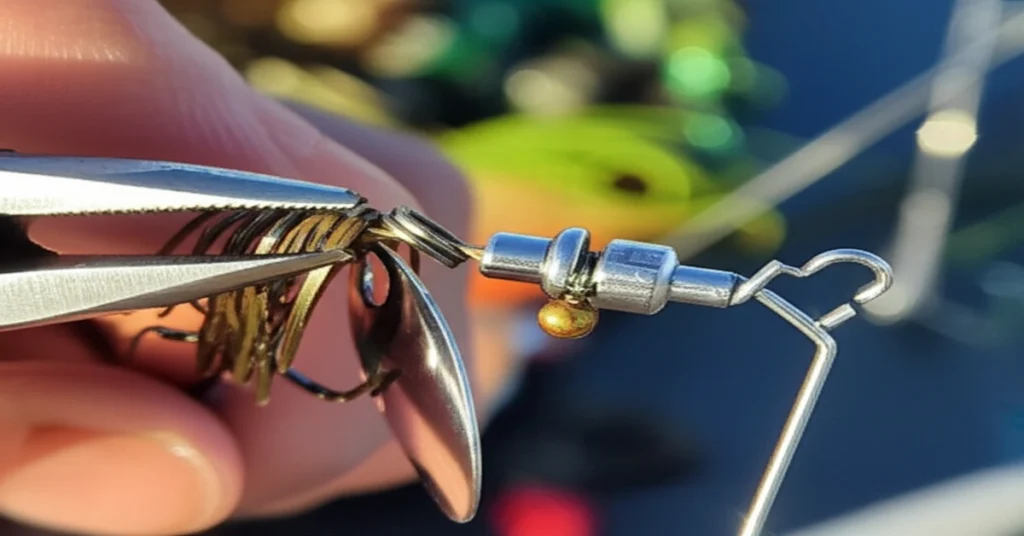
- Rivet & Clacker: This is the primary sound chamber. Tuning the rivet to create a high-pitched squeak is one of the most popular buzzbait modifications, as it mimics the sound of distressed baitfish.
- Wire Frame: The lure’s chassis. Bending the wire arm changes how the lure tracks in the water and can help prevent it from rolling over at high speeds.
- Skirt, Hook, & Trailer: The lure’s body and business end. Customizing skirt colors, adding a trailer hook for short-striking fish, or adding a soft plastic trailer for bulk and buoyancy are essential buzzbait upgrades.
Why buzzbait modifications Matters: Key Benefits
Investing time in buzzbait modifications isn’t just a hobby; it’s a strategic advantage that directly translates to more fish in the boat. A customized lure stands out from the dozens of standard buzzbaits that pressured fish see every day. By creating a unique sound, action, or profile, you trigger a predatory response instead of caution.
Creating a Unique Sonic Footprint
Bass are highly attuned to sound and vibration. A stock buzzbait often has a generic churning sound. Through careful buzzbait tuning, especially by getting the rivet to squeak, you can create a high-frequency noise that drives bass crazy. For example, on a calm morning, a loud, clacking buzzbait might be too aggressive. By bending the clacker away slightly, you can create a more subtle presentation that coaxes bites from wary fish. This level of control is a core benefit of lure customization.
Adapting to Specific Conditions
No single buzzbait is perfect for every situation. Buzzbait adjustments allow you to optimize your lure for the day’s conditions. If you need to retrieve the lure extra slowly over a submerged grass bed, you can cup the blades more to create more lift at slower speeds. Conversely, if you need to burn the buzzbait quickly in open water, flattening the blades will allow it to run faster without blowing out. These modifications give you a versatile tool instead of a one-trick pony.
“The difference between a good day and a great day with a buzzbait often comes down to one or two small tweaks. A squeaky rivet or a trimmed skirt can be the trigger that a tournament-winning fish is waiting for.”
Complete Guide to buzzbait modifications – Step-by-Step
This section provides a clear, actionable process for customizing your buzzbaits. Follow these steps to transform your lure from standard to standout. This is the heart of any good buzzbait customization guide.
Step 1: Achieve the Perfect Squeak
The most famous of all buzzbait modifications is creating a loud, irritating squeak. This sound is achieved by creating friction between the blade and the rivet it spins on. Take a pair of pliers and gently squeeze the rivet, slightly oblonging it. You don’t want to crush it, just apply enough pressure to create a tight tolerance with the blade’s hole. The goal is metal-on-metal friction.
- Specific action item: Use needle-nose pliers to gently pinch the rivet just behind the blade.
- Required tools or resources: Needle-nose pliers.
- Expected outcome: A high-pitched squeak during the retrieve that gets louder with use. You may need to run the lure for a while to “break it in.”
Step 2: Bend and Tune the Wire Arm
The angle of the main wire arm dictates how the lure tracks and at what speed it performs best. For a slower retrieve that stays on the surface easily, bend the arm upwards slightly. This raises the blade’s position, providing more lift. For faster retrieves or fishing in windy conditions, bend the arm downward. This helps the lure stay in the water and track straight without rolling over. These are fundamental buzzbait adjustments.
Step 3: Customize the Blade
The blade is the heart of the lure. Bending the blade’s wings will dramatically change its action. Cupping them more (increasing the curve) will create more lift and a slower, thumping retrieve. Flattening them will allow for a much faster retrieve. Some advanced anglers even drill small holes in the blades to create a bubble trail, a subtle visual cue that can trigger strikes in clear water. Another excellent option in your list of buzzbait improvements is to paint the underside of one blade wing with a marker for a flickering effect.
Step 4: Upgrade the Skirt and Hook
A stock skirt is often too bulky. Trimming the skirt so it’s even with the bend of the hook creates a more compact profile that can lead to better hookups. You can also replace the skirt entirely with colors that match local forage like bluegill or shad. Most importantly, always add a trailer hook. Bass, especially smallmouth, are notorious for swiping at a buzzbait and missing the main hook. A trailer hook will increase your hookup ratio by over 50%.
Step 5: Add a Soft Plastic Trailer
Adding a trailer adds bulk, color contrast, and buoyancy. A toad-style soft plastic can help the buzzbait plane on the surface at extremely slow speeds, which is deadly around shallow cover. A swimbait-style trailer can add a secondary action that makes the lure look more lifelike. This is one of the easiest buzzbait upgrades that has an immediate impact on performance and fish appeal.
Expert Tips & Best Practices for buzzbait modifications
Following a few best practices will ensure your buzzbait modifications are effective and don’t ruin the lure. The key is to make incremental changes and test them on the water. Here are some top buzzbait modification tips.
For Beginners:
- Start Simple: Don’t try to completely rebuild your first buzzbait. Begin with easy, high-impact changes like trimming the skirt and adding a trailer hook. These two simple buzzbait enhancements can dramatically improve your success.
- Test Everything: After every small adjustment, test the lure in a pool, pond, or even a bathtub. Observe how the change affects its action, sound, and speed. This immediate feedback loop is crucial for learning.
- Match Mods to Conditions: Think about why you’re making a change. Need to fish slower? Cup the blade. Fish striking short? Add a trailer hook. Every modification should have a purpose tied to the fishing situation.
For Advanced Users:
- Experiment with Asymmetry: Intentionally bend one blade wing slightly more than the other. This can create a highly erratic, hunting action that can be a powerful trigger for pressured fish. It’s a difficult technique to master but highly effective.
- Combine Sound and Silence: Create a super squeaky buzzbait for aggressive fish, but also create a “stealth” version. You can do this by using a plastic blade or adding a small plastic bead between the blade and rivet to muffle the sound for ultra-clear water or spooky bass.
5 Common buzzbait modifications Mistakes to Avoid
While buzzbait modifications can be a game-changer, a few common errors can render a lure useless. Avoiding these pitfalls is just as important as knowing what to do. This is a critical part of any buzzbait customization guide.
Mistake #1: Over-Crimping the Rivet
The Problem: In the quest for the perfect squeak, many anglers apply too much pressure to the rivet. This can cause it to bind, preventing the blade from spinning freely, especially at the start of the retrieve.
The Solution: Apply pressure in small increments. Squeeze gently, then spin the blade by hand. If it spins freely, cast it and listen. Repeat until you get a squeak without compromising the blade’s spin.
Mistake #2: Ignoring Lure Balance
The Problem: Adding a massive trailer to a lightweight buzzbait or swapping a small blade for a giant one can destroy the lure’s balance. This causes it to roll over on its side during the retrieve.
The Solution: Make sure your components are proportional. If you add a bulky trailer, you might need a blade with more cupping to provide the necessary lift to keep it upright.
Mistake #3: Forgetting the Trailer Hook
The Problem: This is the most common and costly mistake. A bass often attacks the commotion of the blade, causing it to miss the main hook. Without a trailer hook, you’ll feel a strike but won’t connect.
The Solution: Always, always, always add a trailer hook. Secure it with a small piece of surgical tubing on the main hook shank to keep it in the optimal position. This simple step is among the most vital buzzbait improvements.
Mistake #4: Weakening the Wire Frame
The Problem: Repeatedly bending the wire arm in the same spot can cause metal fatigue, leading to the wire breaking on a hookset with a big fish. It’s a heartbreaking way to lose a trophy.
The Solution: Make your bends smooth and deliberate. Avoid sharp, kinking bends. If a buzzbait has caught many fish and been re-tuned dozens of times, consider retiring it from tournament duty.
Mistake #5: Not Sharpening the Hooks
The Problem: Anglers get so focused on the blade and sound that they forget the most important part. A dull hook, even straight from the package, can easily lose fish.
The Solution: Before you ever make a cast, check the hook point. Sharpen it with a file until it’s sticky sharp. Re-check it periodically throughout the day, especially after fishing around rocks or wood.
Advanced buzzbait modifications Strategies for 2024/2025
As fishing pressure increases, anglers need to stay ahead of the curve. These cutting-edge buzzbait modifications focus on modern materials and refined concepts to show fish something they truly haven’t seen before.
Titanium Wire and Component Swapping
Standard stainless steel wire can get bent out of shape after a few fish. Upgrading to a buzzbait with a titanium wire frame (or building your own) provides incredible durability and enhanced vibration. Titanium snaps back to its original shape and transmits sound more efficiently. For a truly custom build, purchase heads, titanium wires, premium blades, and skirts separately from a component supplier. This allows you to build the perfect lure from the ground up, a pinnacle of buzzbait customization.
Buoyancy-Driven Trailer Integration
The use of highly buoyant plastics like Z-Man’s ElaZtech has revolutionized trailer choices. For 2024/2025, the advanced strategy is to use these trailers not just for profile but for performance. Rig a buoyant toad-style trailer on a buzzbait you’ve tuned for a slow retrieve. The trailer’s buoyancy will help keep the entire lure on the surface even at a snail’s pace, allowing you to keep it in the strike zone longer than ever before. This is one of the most effective modern buzzbait enhancements.
Essential Tools & Resources for buzzbait modifications
Having the right tools makes the process of buzzbait modifications much easier and more effective. You don’t need a full workshop, but a few key items are essential.
Recommended Tools:
- Needle-Nose Pliers: Your primary tool for bending wire, crimping rivets, and making fine-tune adjustments. A quality pair is a must-have.
- Split Ring Pliers: Essential for adding or removing trailer hooks quickly and efficiently without damaging the split ring or your fingernails.
- Hook File: A small, diamond-coated hook file is necessary for keeping your main hook and trailer hook surgically sharp at all times.
- Skirt Making Tool & Bands: For anglers who want to get serious about buzzbait customization, this tool allows you to create custom-colored skirts to perfectly match any forage.
Additional Resources:
- Online Lure Component Retailers: Websites like LurePartsOnline.com or BarlowsTackle.com are treasure troves of high-quality blades, wires, heads, and skirts for building custom lures.
- YouTube Tutorials: Channels like TacticalBassin offer excellent visual guides and buzzbait modification tips, showing you exactly how to perform specific adjustments.
Frequently Asked Questions About buzzbait modifications
Q1: What are the most important buzzbait adjustments for a beginner to learn?
Answer: For a beginner, the most critical modifications are those that increase your hookup ratio and adapt to basic conditions. Start with these three: 1) Always add a trailer hook. 2) Trim the skirt to be flush with the hook bend for a compact profile. 3) Learn to slightly bend the wire arm up for a slower retrieve or down for a faster one. Mastering these basics within this buzzbait customization guide provides the foundation for all other buzzbait enhancements and buzzbait improvements. More advanced buzzbait tuning can come later.
Q2: How do I know if my buzzbait is tuned correctly?
Answer: A well-tuned buzzbait should run straight without rolling on its side at your desired retrieve speed. It should come to the surface quickly at the start of the retrieve and stay there with minimal effort. The blade should spin freely and, if you’ve tuned it, emit a consistent squeak or clack. The best test is to watch it in the water – it should look and sound “alive.”
Q3: Can I perform buzzbait repair on a broken wire?
Answer: Generally, no. A broken main wire frame is a fatal flaw for a buzzbait. The stress of fighting a fish is concentrated on that wire, and any home repair (like soldering) will likely create a weak point that will fail under pressure. It’s much safer and more effective to salvage the components like the blade and head (if possible) and discard the broken frame.
Q4: Does the color of the blade matter?
Answer: Yes, blade color can make a significant difference. A silver or nickel blade is great for sunny days as it creates a lot of flash. A black or painted blade is better for overcast days or stained water as it provides a more distinct silhouette against the sky. A gold blade can be effective in tannic or tea-colored water. Experimenting with blade colors is a simple yet powerful form of buzzbait customization.
Conclusion: Master buzzbait modifications for Long-term Success
Mastering the art of buzzbait modifications elevates you from simply using a lure to truly understanding how to make it perform at its peak. By learning to tune, tweak, and customize, you create a presentation that is perfectly suited to the conditions and the mood of the fish. These small changes in sound, speed, and profile are what separate a frustrating day from an unforgettable one.
As you move forward, continue to experiment and observe. The future of angling success lies in attention to detail, and a well-executed program of buzzbait tuning and buzzbait customization is a perfect example of this principle in action. Take the tips from this buzzbait modification tips guide, apply them on the water, and watch your topwater success soar.
Related Articles You Might Find Helpful:
- The Ultimate Guide to buzzbait tuning for Pressured Fish
- How to Choose the Right Soft Plastic Trailer for Your Lures
- Top 5 Lure Customization Techniques for More Bass
What’s Your buzzbait modifications Experience?
What is your single most effective buzzbait modification? Share your best tip or success story in the comments below – we’d love to hear what works for you!
Note: This guide reflects current best practices and is updated regularly to ensure accuracy. Last updated: October 17, 2023